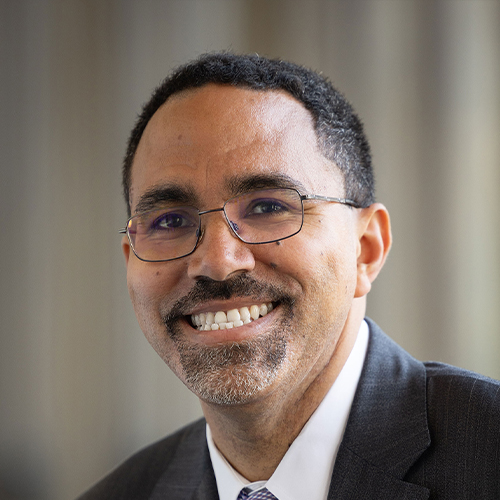
John B. King Jr. is the 15th Chancellor of the State University of New York (SUNY), the largest comprehensive
system of public higher education in the United States. As Chancellor, King and the
SUNY Board of Trustees have established four pillars to guide SUNY's progress: student
success; research and scholarship; diversity, equity, and inclusion; and economic
development and upward mobility.
Under Chancellor King's leadership, SUNY has seen its largest operating aid increase
in five decades, including double-digit percentage increases for every state-operated
campus, the first two back-to-back operating aid increases for community colleges
in decades, and dedicated recurring annual funding for expanding mental health services,
services for students with disabilities, paid internships, and research, as well as
addressing food insecurity.
Under Chancellor King, SUNY has experienced three years of enrollment gains in every
sector for the first time in 15 years. As part of the Chancellor's commitment to student
success, SUNY launched ASAP and ACE – the nation's leading, evidence-based retention
and completion initiatives – which is at 34 campuses and is in the process of scaling
them to reach 10,000 students within the next two years. Chancellor King has also
championed a System-wide Civics and Service Agenda, which includes the launch of the
Empire State Service Corps to provide paid community service opportunities to hundreds
of SUNY students each year.
In research and scholarship, Chancellor King is committed to achieving Governor Hochul's
charge to double research expenditures. Under Chancellor King's leadership, SUNY is
at the forefront of cutting-edge research that fuels economic growth, drives social
impact, and enhances human well-being. SUNY researchers are leading the way in areas
including artificial intelligence, renewable energy, quantum computing, semiconductors
development, and biotechnology and health care. SUNY is implementing the Governor's
Empire AI research center for the public good, which is hosted at the University at
Buffalo and includes SUNY's four University Centers as well as leading private universities.
SUNY's enabling statute requires that the university "provide educational services
of the highest quality with the broadest possible access." To advance diversity, equity,
and inclusion Chancellor King has championed expanded access for students from low-income
backgrounds, veterans, AmeriCorps alumni, first-generation college students, and students
from communities with high levels of adversity. The Chancellor ensured the successful
implementation of SUNY's Diversity, Equity, and Inclusion General Education requirement,
and relaunched PRODiG+ as a postdoctoral fellowship for faculty from all backgrounds
who are committed to diversity, equity, and inclusion. Chancellor King has ensured
that SUNY stands firmly against antisemitism, Islamophobia, and other forms of hatred
and bigotry – including by requiring Title VI training for all faculty, staff, and
student organization leaders.
To ensure economic development and upward mobility for the students SUNY services,
Chancellor King has established the ambitious goal that every undergraduate student
will complete an internship or other experiential learning opportunity before they
earn their degree. To advance that goal, the Chancellor has overseen the launch of
the Chancellor's Summer Research Excellence Fund, the NYS FAFSA Completion Corps,
the Climate Corps, and the Veterans' Enrollment and Support Internship Program. In
addition, Chancellor King is leading implementation of Governor Hochul's SUNY Reconnect
initiative, which provides free community college tuition, fees, books, and supplies
for adults ages 25-55 who don't already have a college degree and pursue an associate
degree in a high-demand field. Chancellor King has been at the forefront of promoting
this transformational opportunity and ensuring SUNY is ready to help empower eligible
New Yorkers to enter the workforce in high-demand careers.
Before being appointed SUNY Chancellor, King served in President Barack Obama's cabinet
as the 10th U.S. Secretary of Education. Upon tapping him to lead the U.S. Department
of Education, President Obama called Chancellor King "an exceptionally talented educator,"
citing his commitment to "preparing every child for success," and his lifelong dedication
to public education as a teacher, principal, and leader of schools and school systems.
Following his service as U.S. Secretary of Education, King was President and CEO of
The Education Trust, a national civil rights nonprofit, and served as Professor of
the Practice at the University of Maryland College Park.
Before joining President Obama's cabinet, Chancellor King served as New York State
Education Department (SED) Commissioner, and was the first African American and first
Puerto Rican to lead in that role. As SED Commissioner, King oversaw all elementary
and secondary schools, as well as public, independent, and proprietary colleges and
universities, professional licensure, libraries, museums, and numerous other educational
institutions.
Chancellor King holds a Bachelor of Arts in government from Harvard University, a
J.D. from Yale Law School, as well as both a Master of Arts in the teaching of social
studies and a doctorate in education from Teachers College at Columbia University.
President, FIT
Jason Schupbach
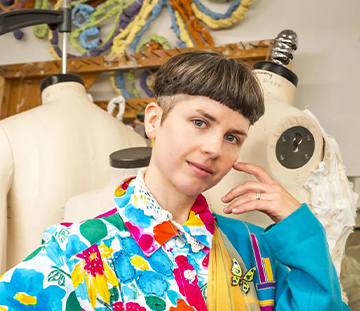
Jason Schupbach is the president of the Fashion Institute of Technology (FIT).
Preceding his position at FIT, Schupbach was the dean of the Antoinette Westphal College
of Media Arts and Design at Drexel University. He is a nationally recognized expert
on support systems for creatives and on the nexus of creativity and comprehensive
community development.
At Drexel, Schupbach led the college to success in fundraising, rankings, scholarly
output, enrollment, and faculty, staff, and student support. He launched a groundbreaking
new apprenticeship model of education with URBN and was the co-editor of The Routledge Handbook of Urban Cultural Planning, published in 2025. Before joining Drexel, Schupbach was the director of The Design
School at Arizona State University (ASU), where he led the ambitious ReDesign.School
initiative to reinvent design education for the 21st century and was a key advisor
to ASU on diverse projects, such as the Studio for Creativity, Place and Equitable
Communities; James Turrell’s large-scale land artwork, Roden Crater; and ASU’s downtown
Los Angeles campus.
Prior to ASU, he was director of Design and Creative Placemaking programs for the
National Endowment for the Arts (NEA), where he oversaw all design- and creative-placemaking
grantmaking and partnerships, including Our Town and Design Art Works grants, the
Mayors’ Institute on City Design, the Citizens' Institute on Rural Design, and the
NEA’s federal agency collaborations. In addition, he oversaw "Creativity Connects,"
the first report in a decade on the major trends and conditions affecting U.S. artists
and designers, and a new grant program to support partnership projects between creatives
and other fields of practice.
Earlier, Schupbach served then-Governor Deval Patrick of Massachusetts from 2008 to
2010 as the Creative Economy director, tasked with supporting creative and tech businesses
in the state. He formerly was the director of ArtistLink, a Ford Foundation-funded
initiative to support creatives and to stabilize and revitalize communities through
the creation of affordable space and innovative environments for creatives. He has
also worked for the mayor of Chicago and New York City’s Department of Cultural Affairs.
He has written extensively on supporting creatives and the role of art and design
in uplifting communities. His writing has been featured as an Aspen Institute "Best
Idea of the Day."
Schupbach earned a Master in City Planning degree and a graduate-level urban design
certificate from the Massachusetts Institute of Technology (MIT) in 2003. He received
a Bachelor of Science in public health from the University of North Carolina at Chapel
Hill in 1997.
Chair, Sustainability Council
Karen Pearson
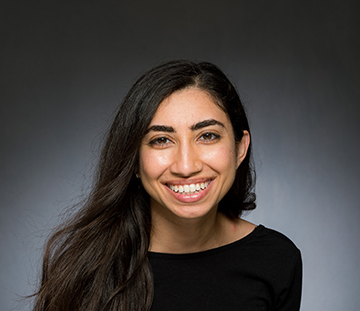
Karen R. Pearson, PhD, is a full professor of Chemistry and the chair of FIT’s Sustainability Council.
Her work focuses on the development of intersectional curriculum, programs, and research
directed toward preparing the next generation to address our biggest global challenges.
This work is grounded in a cross-disciplinary STEAM (Science, Technology, Engineering,
Arts, and Math) approach that unites education, sustainability, and workforce development.
She is the recipient of numerous awards, including a SUNY Chancellor’s Award for Excellence
in Service and Excellence in Teaching and the President’s Award for Curricular Innovation,
and has been acknowledged as one of the 100 most influential women in STEM. Her work
has resulted in multiple National Science Foundation (NSF) and National Endowment
for the Arts (NEA) grants and numerous peer-reviewed articles.
Presenters and Speakers
Janelle Abbott
Founder, JRAT and Wardrobe Therapy
Born into a fashion family, Janelle Abbott’s parents owned a Seattle clothing factory, where Abbott developed an early respect
for the labor behind every stitch. After graduating from Parsons, she rejected corporate
fashion, choosing a radically sustainable, zero-waste path. Through her label JRAT
and her Wardrobe Therapy project, Abbott transforms discarded materials into rhythmic,
layered, unapologetic garments. Her work merges activism, art, and performance—a form
of labor solidarity. She exposes fast fashion’s farce through garment reclamation,
reminding us that all garments are human artifacts.
Kozaburo Akasaka
Founder/Designer, Kozaburo
Kozaburo Akasaka is the founder and creative director of Kozaburo, a New York-based fashion label
rooted in Japanese craftsmanship and a deep respect for materiality. Known for his
sculptural silhouettes and thoughtful approach to construction, the designer brings
a quiet yet powerful perspective to sustainability through his PRM line—a project
dedicated to upcycling and reimagining deadstock and archive pieces. His work bridges
heritage techniques with a forward-looking design ethos, challenging the industry
to find beauty and meaning in imperfection.
Juanita Alcena
Executive Director for Miami and New York, CraftChangeHaiti; Fashion Design faculty,
FIT
Born in Petite Riviere de l'Artibonite, Haiti, Juanita Alcena always had an interest in fashion, but as a girl made do with whatever resources
she could find. Her imagination helped her create her own toys: a dollhouse made of
cardboard, mango-seed dolls with clothes crafted from paper. Repurposing and upcycling
were integral parts of her everyday life. Her family never discarded clothes; instead,
they reimagined them, which sparked Alcena’s desire to study fashion design.
As a designer and instructor, she has always been involved in her community, volunteering
at women’s shelters and teaching sewing skills. When Alcena first met her friend Tracey
Tsai, founder of CraftChangeHaiti—a nonprofit organization that empowers seamstresses
in Haiti—she joined the foundation’s work. She now serves as its executive director
for Miami and New York. The foundation uses fashion to empower women toward financial
freedom and tackles the problem of plastic waste.
Growing up in Haiti, Alcena never encountered plastic; now, the resourceful Haiti
she knew is struggling with plastic polluting the air, land, and water. In Haiti,
there is no clean water supply, so people buy clean water in plastic pouches that
are discarded. Alcena’s mission is to help Haiti and teach women there and around
the world how to repurpose waste materials into new, useful products.
Anita Alikaj-Jones
Fashion Designer, Patternmaker
Anita Alikaj-Jones is currently enrolled in the Nordstrom / FIT Custom Alterations and Tailoring Techniques
Certificate Program. She is a fashion designer who has spent the last decade constructing
authentic custom pieces for a discrete private audience on a part-time basis. She
is continually experimenting on her distinctive style—where sophistication meets functionality—through
innovative designs, patternmaking, and made-to-measure dresses, skirts, trousers,
and blouses. Alikaj-Jones was born in Albania and moved to Milan when she was 14 years
old. She studied fashion design and graduated from Instituto Di Moda Burgo and Ente
Cattolica Formazione Professionale. She held various sales positions in Milan at Tom
Ford, Pollini, and Bernini. She relocated to Manhattan after meeting her husband in
2009, and has been living on the Upper East Side for 17 years. Alikaj-Jones holds
a Patternmaking Certificate from FIT and has collaborated with several accomplished
patternmakers. She continues to take supplemental classes, learning new techniques
and best practices. A proud mother of two boys, ages 13 and 10, she is fluent in Albanian,
Italian, and English.
Sarah Allibhoy
Associate Director of Strategy and Insights at Nuuly
Sarah Allibhoy is associate director of strategy and insights at Nuuly, URBN’s fashion rental subscription
service. She leads sustainability strategy for the brand, whose mission is to extend
the life of clothes, leveraging data and insights to help Nuuly’s teams make decisions
that keep garments in circulation longer and demonstrate that clothing rental is gentler
on the planet. Allibhoy holds an MBA from MIT Sloan with a certificate in sustainability.
She has spent her career at the intersection of business strategy and environmental
impact, including early work scaling a sustainability-focused venture in East Africa.
Frederick Anderson
Designer, Frederick Anderson Collection
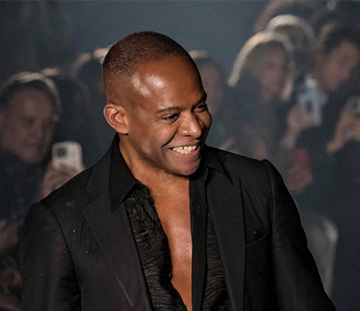
Frederick Anderson is an American designer and philanthropist who began his fashion career two decades
ago as a founding partner of Anderson Hannant, where he designed and produced the
Douglas Hannant collection into a celebrated name among celebrities and socialites.
Driven by an accurate appreciation for design detail and storytelling, Anderson launched
his eponymous collection in fall 2017 to immediate critical acclaim. A longstanding
member of the prestigious CFDA Fashion Calendar, he was honored in 2022 with the Fashion
Group International’s Rising Star Award for Womenswear. In April 2024, he opened his
first flagship boutique in Manhattan’s NoMad neighborhood, and in December of that
same year, presented a destination show in San Juan, Puerto Rico. A committed humanitarian,
Anderson founded the Blue Jacket Fashion Show in 2016—an annual awareness campaign
and runway event dedicated to prostate cancer education. Opening New York Fashion
Week’s fall season each year, the show has grown into one of the most recognized advocacy
efforts on the American fashion calendar. In 2025, Anderson was featured as a subject
on the PBS series Human Footprint, which profiles individuals leaving a meaningful
mark on the world, a distinction that speaks as much to his character as to his craft.
His collections remain a fixture among fashion editors and celebrity tastemakers,
cementing Frederick Anderson as a designer whose influence extends far beyond the
clothes he creates.
Julia Bakker-Arkema
Associate Research Scientist at the Metropolitan Museum of Art
Julia Bakker-Arkema is an associate research scientist at the Metropolitan Museum of Art. She specializes
in volatile chemical emissions and air quality. Her research priorities lie in understanding
the chemical processes that occur in museum environments through air sampling, materials
testing, environmental monitoring, and casework studies. Bakker-Arkema is passionate
about integrating sustainable, evidence-based, creative, and collaborative preventive
conservation solutions into collections care. She holds a PhD in chemistry from the
University of Colorado, Boulder.
Andrea Baldo
CEO, Mulberry Group
Since September 2024, Andrea Baldo has been Chief Executive Officer of iconic British lifestyle brand Mulberry. He previously
served as CEO of the progressive luxury brand Ganni for five years. Before joining
Ganni, Baldo was CEO of the Italian leather goods brand Coccinelle and also held the
position of general manager at luxury fashion houses Marni and Maison Martin Margiela.
Additionally, he has held several top management positions at Diesel. Baldo began
his career in strategic management consulting and entered the fashion industry while
consulting at Bain & Company in 2000. He earned a degree in economics with honors
from the University of Verona and is a graduate of the General Management Program
at Harvard Business School. Baldo is also a Fellow of Strategic Management at IESE
Business School, where he coteaches the MBA course Strategic Management in the Fashion
and Luxury Goods Industry. He also writes business cases and technical notes on the
luxury industry.
Erin Beatty
Founder of Rentrayage
After graduating from UCLA and completing internships at Chanel and Nylon magazine, Erin Beatty entered the Retail Management Program at the GAP under Mickey Drexler. Encouraged
by her mentor and GAP's Creative Director Pina Ferlisi, Beatty then enrolled in the
design associate degree program at Parson, later interning at Donna Karan Collection,
before following Pina to Generra as a designer. In 2008, Beatty co-founded the label
Suno with Max Osterweis. Suno’s inaugural collection was produced in Kenya from vintage
Kanga fabrics—an early signal of her commitment to intentional sourcing. Known for
high-end tailoring and dynamic prints, Suno was carried by more than 80 prestigious
retailers worldwide. A finalist for the Vogue/CFDA Fashion Fund in both 2012 and 2013,
Suno won the CFDA Swarovski Award for Womenswear in 2013. The same year, Beatty was
named creative director of ready-to-wear at Tory Burch. In 2014, Suno was named a
finalist in the inaugural LVMH Prize.
Fed up with the waste she’d witnessed during her 20 years in fashion, Beatty launched,
in 2019, a sustainable clothing and home decor brand, Rentrayage—from the old French
term meaning “to mend, to reweave across the cut.” The label is a deliberate rethinking
of how clothing is made. Feeling uninspired by conventional sustainable fabric offerings,
Beatty turned to vintage garments, transforming old clothes into unexpected new concepts.
Rentrayage also works with deadstock fabrics, materials discarded by other designers
and factories. Smart, irreverent, and deeply considered, Rentrayage reflects Beatty's
belief that conscious living is not a trend, but a way of life.
Carly Bigi
Founder and CEO, Laws of Motion
Carly Bigi is the founder and CEO of Laws of Motion, the AI sizing technology solving the $1
trillion e-commerce return crisis for apparel brands, such as Alice+Olivia, Simkhai,
and A.L.C., by guiding customers to order their best-fitting size. Laws of Motion’s
technology was incubated in its own size- and shape-inclusive direct-to-consumer women’s
wear brand, which has a 1% return rate and zero-waste manufacturing process. Laws
of Motion has been featured as Time magazine’s invention of the year, Fast Company’s world changing idea, and Glossy’s most disruptive startup. Bigi attended Vanderbilt
University and Columbia Business School, where she is an adjunct lecturer in entrepreneurial
strategy. Passionate about growth, Bigi is a limited partner in early-stage venture
funds and startup advisor. She splits time between New York City and Los Angeles.
Federico Brugnoli
Innovator, Entrepreneur, Founder and CEO of SPIN360
In 2009, Frederico Brugnoli founded Spin 360, a consulting firm specializing in sustainable innovation and development
across multiple industries. Brugnoli works with his teams to develop an integrated
approach toward innovative sustainability, encouraging collaboration between large
corporations and small- and medium-sized businesses. For nearly two decades, the company
has been actively engaged in the leather industry, offering specialized services in
life-cycle assessment and corporate carbon-footprint analysis for leather stakeholders,
while driving innovative projects within the sector. Spin 360’s core values of sustainability,
progress, innovation, and network guide their approach to creating long-term, positive
change for businesses and industries.
The United Nations Industrial Development Agency (UNIDO) commissioned Spin 360, under
the leadership of Brugnoli, to establish harmonized leather life-cycle guidelines,
addressing the urgent need for global action to standardize the requirements and methodologies
used to calculate the environmental footprint of leather on a global scale.
Brugnoli studied environmental sciences at the State University of Milan, where he
graduated with honours in 1997. And in 2022, the University of Northampton awarded
him an honorary doctorate in fashion sustainability.
Ann Cantrell
Ann Cantrell is an entrepreneur and academic who has owned a modern general store in Brooklyn
for more than 18 years and has taught full time at FIT for 15-plus years in the Fashion
Business Management program. Prior to teaching and entrepreneurship, Cantrell worked
for over a decade in the fashion industry—at Brooks Brothers, Ralph Lauren, and Coach—primarily
in product development. A passionate advocate for small independent businesses, she
has been featured by the American Express Small Business Saturday program and quoted
in media outlets such as The New York Times, USA Today, Forbes, BBC World News, NBC,
MSNBC, ABC News, and the Associated Press.
Cantrell holds an MBA with a concentration in sustainability and champions the triple
bottom line—balancing environmental and economic sustainability. At FIT, she was honored
with the President’s Sustainability Council’s Changemakers Award for her long-term
contributions to advancing sustainability on campus. Her latest paper on FLOW Fashion
will appear as a chapter in the De Gruyter Handbook of Fashion Supply Chains and Operations
(2026), and she is currently revising the fourth edition of Fashion Entrepreneurship:
Retail Business Planning (Bloomsbury, 2027).
Gia Carrascoso
Founder and CEO of Upcyclers
Gia Carrascoso brings over 30 years of fashion, media, and marketing experience. Throughout her
career, she has designed collections, produced runway shows, published fashion magazines,
run a fashion blog, and covered Hollywood red carpet fashion. She has worked as a
VP of marketing in the tech industry, leading community growth and brand partnerships.
Carrascoso’s work has always centered on creativity with purpose, producing, for example,
fundraising runway shows for breast cancer survivors and for medical and surgical
missions. Her designs have been worn by boldface names—such as by Maye Musk, Jeannie
Mai, Vivica A. Fox, Lyndie Greenwood, and Goapele—and featured in fashion magazines
and a music video.
In 2023, after launching a fully upcycled fashion line and seeing how fragmented the
ecosystem was, with no infrastructure to help upcyclers build, sell, and scale, Carrascoso
founded Upcyclers, a visual-first platform and marketplace for the next generation
of sustainable creators. Upcyclers is an integrated ecosystem that brings together
inspiration, sourcing, creation, and commerce with upcycled products, secondhand materials,
AI tools, shoppable video, and a learning community. Upcyclers won first prize in
the Founders Live Pitch Contest at Stanford University in November 2025, earning $1
million in software and business credits.
Photo by Marcus Lyon
Nalleli Cobo
Environmental Activist
At just 19 years old, Nalleli Cobo led a grassroots campaign resulting in the permanent closure of a hazardous oil-drilling
site in her community. This site, infamous for its toxic emissions, had inflicted
severe health issues on Cobo and her neighbors. Growing up in South Los Angeles, Cobo
became an activist at age 9, spurred by the foul odors emanating from the oil well
across the street from her home. Enduring headaches, nosebleeds, and heart palpitations
due to the pollution, she began attending meetings and rallies alongside her mother,
delivering her first public speech on the matter before she was 10 years old. Her
oratory skills and unwavering dedication positioned her as a leading voice advocating
for a ban on oil extraction in L.A. In March 2020, her work culminated in the permanent
shutdown of the AllenCo Energy drilling site and led to criminal charges against AllenCo
Energy executives for environmental violations.
As her activism gained momentum, Cobo co-founded initiatives like People Not Pozos
and the South Central Youth Leadership Coalition, despite personal adversity and a
cancer diagnosis at age 19. Cobo has received numerous accolades for her work, including
the 2022 Goldman Environmental Prize and inclusion on the 2022 Time100 Next list of
future leaders.
Deanna Crevecoeur
Founder and CEO, Coeur
Deanna Crevecoeur is the founder and CEO of Coeur, a purpose-driven company aiming to disrupt the luxury
leather goods industry. Coeur offers handbags crafted of farm-traceable leather, exclusively
sourced as a byproduct of American farms practicing regenerative agriculture. Coeur
partners with American businesses across sourcing, leather production, tanning, and
product manufacturing to ensure a transparent, streamlined, and entirely domestic
leather supply chain. Crevecoeur graduated from the Fashion Institute of Technology
in 2023 with a bachelor’s degree in Production Management and a minor in Ethics and
Sustainability. She was a top 3 finalist in the Fashion Institute of Technology’s
PETE Prize for Entrepreneurs in 2025. She has 10-plus years of experience in design,
production, and operations management.
Madeleine Danzberger
Sustainability and Social Impact Specialist, Steve Madden
Madeleine Danzbergeris a sustainability and social impact specialist at Steve Madden, working across product
circularity, corporate philanthropy, ESG reporting, and community partnerships. She
is passionate about finding unrealized value across the product life cycle and building
the systems that make a more responsible fashion industry operational, not aspirational.
Nate Dappen, PhD
Director, Senior Producer at Day’s Edge Productions
Nate Dappen is a biologist-turned-filmmaker based in San Diego. He studied evolutionary biology
at the University of Miami, earning his PhD in 2012. That same year, He co-founded
Day’s Edge Productions with Neil Losin; they specialize in documentaries about science,
nature, and society. Together with Princeton biologist and host, Shane Campbell-Staton,
Dappen and Losin co-created and directed the Emmy-nominated PBS science series, Human
Footprint, now in its second season. Dappen’s work centers on humanity’s complex relationship
with and global impact on the natural world—a relationship in which human culture
and technology conspire with our basic biological needs to become the most powerful
ecological and evolutionary force on the planet.
Dana Davis
Founder, Dana Davis Consulting
Dana Davis is a distinguished authority in sustainable fashion with more than two decades of
industry experience and a proven track record of building transformative sustainability
strategies. In 2024, Davis founded Dana Davis Consulting, a strategic advisory practice
helping fashion brands, innovators, and investors build and execute sustainability
and commercialization strategies. Her firm bridges the gap between vision and implementation,
guiding companies as they scale responsibly, bring innovations to market, and integrate
sustainability across their business operations.
Previously, for over 15 years, Davis played a key role in shaping the sustainability
and circularity strategy at Mara Hoffman, positioning the brand as an industry model
for responsible design and regenerative business practices. Davis’ expertise spans
material innovation, supply chain stewardship, circular design, and strategic growth.
A graduate of the Fashion Institute of Technology, she brings a unique blend of creative
vision, technical knowledge, and systems thinking. Davis is a trusted advisor and
thought leader committed to driving systemic change and building a sustainable, regenerative
future for fashion. She co-chairs the Custom Collaborative board, founded Women in
Sustainable Business, and co-founded NY Workforce Development Coalition, initiatives
dedicated to collaboration, equity, and building a resilient future workforce.
Sarah Davis
Founder and President, Fashionphile
Sarah Davis is the founder and president of Fashionphile. She was named one of Forbes Magazine’s “Ten Female Entrepreneurs to Watch,” and Entrepreneur Magazine called Fashionphile one of the 100 “Smartest, Most Innovative, Hands Down Brilliant
Companies on Our Radar.” Fashionphile was bootstrapped from 1999 until 2019, when
Neiman Marcus joined as their first investor. It is the largest online platform for
buying and selling ultra-luxury handbags and accessories, and their hybrid flagship/
authentication centers and circular stores are popular with the luxury customer. In
2023, Fashionphile became a certified B- Corporation. Davis graduated from Brigham
Young University and has a juris doctorate from The University of Maryland School
of Law. She enjoys cycling, good books and exploring new places with her husband and
four kids.
Lisa Diegel
Director of Sustainability and Impact at Faherty Brand
Lisa Diegel is currently the director of sustainability and impact at Faherty Brand, a certified
B Corporation, where she drives purpose-driven strategies across the business, from
sourcing and circularity initiatives to industry partnerships and impact reporting.
With a background that includes roles at Aritzia, Ralph Lauren, LVMH, and VF Corporation,
Diegel brings expertise in environmental, social, and governance criteria (ESG); compliance;
and responsible sourcing. A proud citizen of the Nisga’a Nation, Diegel’s First Nations
heritage and passion for environmental stewardship shape her commitment to equitable
and regenerative practices in fashion.
Andrea Diodati
Fashion Designer, Andrea Diodati Assistant Professor, Fashion Design, FIT
Andrea Diodatiis an award-winning fashion designer and entrepreneur. After seeing the wasteful nature
of her wholesale fashion line, Diodati created a direct-to-consumer brand that used
3D modeling to facilitate customer collaboration. Clients could codesign custom-made
dresses that were crafted in New York City using deadstock fabric. Diodati’s industry
experience includes designing runway for Anna Sui as well as freelancing for Kate
Spade and Alice + Olivia. Presently, Diodati is exploring how digital fashion can
replace single-use garment consumption.
Susan Easton
Product and Marketing Director, New York Fashion Innovation Center
Susan Easton is a creative leader working at the intersection of design, sustainability, and supply
chains. She is the product and marketing director at the New York Fashion Innovation
Center (NYFIC), where she helps connect farmers, manufacturers, researchers, and designers
to build a more local and transparent textile ecosystem in New York State. Easton
is the founder of From the Road, a luxury textile brand collaborating with artisans
worldwide to create handcrafted pieces rooted in traditional techniques. Her work
explores the relationship between people, materials, processes, and place, and how
these shape more inclusive approaches to design and production. She regularly speaks
on sustainability and design, working with designers, brands, and institutions to
deepen understanding of material journeys from source to finished product and to support
more responsible systems.
Emilyn Edillon
Program Strategies Manager, Council of Fashion Designers of America (CFDA)
Emilyn Edillon is a program strategies manager at the CFDA, where she leads cross-functional initiatives
supporting designers, manufacturers, and the broader U.S. fashion ecosystem. Since
2019, she has worked on key programs, including the Fashion Manufacturing Initiative
(FMI) and NY Forward through New York City and State partnerships and the Swarovski
Foundation Re:Generation Innovation Fund supporting sustainability and material innovation;
as well as the CFDA x Genesis House AAPI Design + Innovation Grant and CFDA’s A Common
Thread initiative in partnership with Vogue. Prior to CFDA, Edillon worked for almost a decade across the luxury fabric and wholesale
sectors, including five years representing mills from Asia and Europe on both the
West and East Coasts. Her experience across the product lifecycle—from raw materials
to finished goods—brings a strong behind-the-scenes and manufacturer perspective to
her work, grounded in empathy and insight.
Michael Ferraro
Executive Director, FIT DTech Lab
Michael Ferraro serves as the executive director of the Design and Technology Lab (DTech) at FIT,
where he oversees industry partnerships and collaborative programs for the college.
The DTech Lab is a vital part of the FIT Center for Innovation, a bridge between academia
and industry. Its mission is to advance the business objectives of industry partners
by leveraging emerging technologies and innovative creative direction. Ferraro is
a creative technologist, researcher, artist, and educator whose career spans computer
animation, software development, virtual reality media production, fashion, retail,
fine art, entertainment, and higher education. Before joining FIT, he spent 12 years
at Lehman College/CUNY as an associate professor in the digital media program of the
art department. In 2015, he collaborated with students to win a NY Emmy for Graphics
and Animation Supervision for a series of PSAs titled “Best of the Bronx.” Before
his tenure at Lehman, Ferraro founded Possible Worlds, an innovative real-time animation
studio that worked with clients such as Warner Bros., MTV, Nickelodeon, and Cartoon
Network. In the 1990s, Ferraro created large-scale virtual worlds shown in contemporary
art centers around the world. In the mid-1980s, he co-founded Blue Sky Studios and
served as system architect of the Academy Award-winning CGI Studio Renderer and production
animation system. He created his first computer-generated image in 1969 and continues
to produce them today.
Noemi Florea
Founder and CEO of Laero
Noemi Florea is founder and CEO of the industrial design agency Laero and the inventor of Cycleau,
a compact system that turns gray water (household waste water containing no serious
contaminants) into drinking water. Using a four-stage treatment process, Cycleau removes
200-plus contaminants, reduces building water footprints by up to 80%, and lowers
energy demand by more than a third—all at a fraction of the cost of conventional systems.
Cycleau has been piloted in projects ranging from a public bottle-filling station
in the U.S. to schools along the Tajikistan-Afghanistan border. By capturing and recycling
gray water close to where it is consumed, the Cycleau system reduces pollution, conserves
resources, and supports safe, affordable water access.
Florea is an internationally esteemed climate innovator, recognized by institutions
such as the U.N. Environment Programme, UNICEF, and MIT Solve. Florea has also won
prizes from the Swarovski Foundation, HP Inc., Halcyon Incubator, and the Trust for
Governors Island.
Stacy Flynn
Co-Founder and CEO, Evrnu
Stacy Flynn is co-founder and CEO of Evrnu, a B-Corp building regenerative textile infrastructure
for the global fashion industry. She led the development of NUCYCL, a patented technology
that converts cotton textile waste into high-performance, multirecyclable fibers—positioning
Evrnu at the forefront of circular materials innovation. With over $30 million raised
and $500 million-plus in offtake commitments, the company’s first commercial facility
is underway in South Carolina. Flynn is focused on scaling circular manufacturing
systems that align profitability with regeneration. Flynn is a TEDx speaker, systems
thinker, and builder of the next era of materials.
Program leader in fashion business, Istituto Marangoni London Author; Contributor, Vogue Italia
Sennait Ghebreab is program leader of the fashion business BA (honors) at Istituto Marangoni London,
bringing a globally informed perspective to fashion education with a focus on sustainability,
cross-cultural branding, and academic innovation. She leads the strategic development
and delivery of international curricula, workshops, and research-based projects, bridging
industry relevance with responsible leadership. Her industry experience includes roles
at Burberry, working with international buyers across EMEA markets, and collaborations
with Matthew Williamson, Pringle of Scotland, and Joseph. Sennait is also a fashion
journalist and intercultural communicator, contributing to Vogue Italia since 2022 on fashion, sustainability, African fashion weeks, and cultural identity.
Her interview with Italy’s Foreign Minister Antonio Tajani on citizenship reform was widely noted.
Ghebreab has lectured as a visiting professor in Italy, France, the U.S., Thailand,
China, and Taiwan, underscoring her commitment to global academic outreach. Her achievements
include a 2022 Positive Leadership Award (U.K.), 2021 Talented Young Italian Award
under 40, and membership on the board of the Italian Chamber of Commerce in the U.K.,
promoting international collaborations in fashion and entrepreneurship. Her 2023 book,
Responsible Fashion Business in Practice (Routledge), presents a model for ethical branding and sustainable retail.
Merging Eritrean roots with Italian heritage and international experience, Ghebreab
exemplifies intercultural leadership, championing sustainability, inclusion, and social
responsibility across academia, journalism, and institutional work.
Morgan Ginn
Program Manager at The Footwear Collective
Morgan Ginn is the program manager at The Footwear Collective (TFC), a nonprofit uniting the
footwear industry to accelerate circularity. At TFC, she oversees member engagement
and drives collaborative projects that advance circular solutions across the value
chain. She brings experience in textile circularity and sustainability strategy, including
work with Accelerating Circularity to develop pathways for nonreusable textiles. Ginn’s
work is rooted in a commitment to building systems that reduce environmental impact
and create more resilient, responsible industry practices. She holds a master’s degree
in sustainable fashion from Glasgow Caledonian University (GCNYC).
Hiywet Mimi Girma
Designer and Founder, YESAET
YESAET is Style × Positive Impact. Founded by designer Hiywet “Mimi” Girma, Yesaet is a contemporary women’s wear brand rooted in African artisanal heritage
and New York craftsmanship. Yesaet collaborates with women-led artisanal cooperatives
in Ethiopia, Ghana, and Burkina Faso—handcrafting ancient textile traditions into
exclusive, responsibly made designs. Girma brings over 25 years of fashion design
experience, including roles at Armani Exchange, BCBG Max Azria, and Vivienne Tam.
Born in Ethiopia, raised in Côte d’Ivoire, educated in the UK, and an FIT Alumn, Girma’s
multicultural origins and life in New York shaped a design eye around textile, form,
style, and innovation. In Amharic, the word yesaet means “all that is female,” translating
into “a woman’s work,” As a brand, Yesaet’s sustainable practices and priorities are
designed capture and reflect a woman’s resolve and power to create positive impact
in her community and at large, connecting past, present, and future toward a healthier
world. Yesaet is located in DUMBO, Brooklyn, where Girma resides with her family.
Caroline Gordon
Strategy Consultant, CG Consulting Adjunct Instructor, Fashion Institute of Technology
Caroline Gordon has been an adjunct professor at the Fashion Institute of Technology since 2018,
teaching in both the Schools of Business and Technology and Art and Design. She is
also an active member of the FIT Sustainability Council and a co-chair of the college’s
annual Sustainability Conference. Gordon has worked in the fashion industry in New
York City for 20 years across multiple American brands, including Ralph Lauren, Ann
Taylor, and Hill House Home. She has experience in women’s wear and children’s wear,
with a focus on buying, planning, and wholesale sales.
In addition to teaching at FIT, Gordon runs a consulting company, CG Consulting, helping
small and sustainable companies scale their business. With inside relationships around
the industry and experience in sales and buying, CG consulting has helped numerous
clients from around the country reach their annual goals and shape the foundation
of their company for growth. Gordon is a graduate of University of Pennsylvania, serving
as co-chair for her graduating class at the Penn Fund. Gordon is also an active member
of the Jay H. Baker Retail Initiative at the Wharton School, aimed at mentoring students
and networking retail professionals.
Aleks Gosiewski
Founder and CEO, Keel Labs
Aleks Gosiewski is the co-founder and CEO of Keel Labs, where she leads the commercialization of
Kelsun, a seaweed-based fiber. An alum of the Fashion Institute of Technology with
a background in fashion design and business, she brings a systems-driven approach
to building sustainable materials companies. Her pioneering work at the nexus of science
and design earned her a spot on Forbes 30 Under 30.
Marcie Greene
Marcie Greene is an assistant professor in FIT’s Fashion Business Management program. With over
20 years of experience in fashion merchandising and a strong commitment to sustainability,
Greene actively shapes the next generation of environmentally conscious industry leaders
by teaching sustainability and developing core business curricula. She holds a BFA
from the University of Michigan and MA in management in sustainable fashion from the
the Sustainable Business Management School (SUMAS). In addition to her teaching, Greene
serves on FIT’s Sustainability Council and has been honored with the President’s Award
for Faculty Excellence.
Mya Love Griesbaum
CEO and Founder of Mycorrhiza Fashion, Materials Science Researcher
Engineering at the convergence of design, biology, and materials science, Mya Love Griesbaum is redefining the future of fabric. While conducting research on mycoremediation
at the Illinois Mathematics and Science Academy (IMSA), Griesbaum was inspired by
fungi’s regenerative power and ability to digest synthetic pollutants. Griesbaum also
had a growing interest in fashion but didn’t want to contribute to its seismic industrial
pollution. Consequently, she found a way to align her interests: A series of experiments
with bacterial cellulose, algae, and fungi ultimately catalyzed her biotech startup,
Mycorrhiza Fashion, which uses fungi to transform synthetic fashion waste into sustainable
textiles with the mission of fostering a radical symbiosis between people, the planet,
and our clothes. This vision has been honed through research at Georgia Tech’s Materials
Science and Engineering Department and accelerated by mentorship from Nanyang Technological
University of Singapore. Currently, Griesbaum is cultivating a global network of innovators
to prove that we can fashionably combat the climate crisis and grow a sustainable
future.
Douglas Hand
Chair, FIT Foundation Board of Directors; Partner, Hand Baldachin & Associates LLP
Douglas Hand is a founding partner of Hand Baldachin & Associates and serves as chair of the FIT
Foundation Board. His legal practice focuses on fashion and lifestyle brands, representing
premium forward-thinking labels such as Stella McCartney, Everlane, and Zadig & Voltaire.
A preeminent specialist in the legal frameworks surrounding the supply chain, Hand
advises clients on compliance with environmental and social impact standards, as well
as the transition toward circular economy models and closed-loop systems. He is the
vice chair of Goodwill NY/NJH, a founding board member of Closely Crafted, and serves
on the CFDA’s business advisory committee. Hand is an adjunct professor of fashion
law at NYU and Cardozo School of Law, where his curriculum addresses the evolution
of ESG and sustainability disclosure in the global market. A major voice in the industry
dialogue, he is the author of two books, including The Laws of Style (American Bar Association), and hosts a podcast and YouTube series of the same name.
His work and insights have been featured in The New York Times, The Wall Street Journal, and WWD.
Angela Hartwick
Founder, Made By Masters
Angela Hartwick is building the authentication infrastructure that makes human mastery scalable for
luxury fashion, enabling transparent, verifiable partnerships between artisan masters
and global brands. Made By Masters provides binary certification for handloom weaving,
natural dyes, and artisan techniques—addressing regulatory requirements (EU Digital
Product Passport, AI Act) while creating cultural datasets for ethical AI training.
Hartwick’s work draws on decades of deep engagement with traditional textiles and
natural systems: early career as a costume designer and stylist specializing in Middle
Eastern and South Asian cultures, two decades of documentary filmmaking across global
communities, and lived experience building off-grid infrastructure in the Canadian
wilderness. This intersection of fashion design expertise, cultural knowledge, and
natural systems understanding informs her approach to translating ancient technology
for contemporary markets—proving craft and nature are efficient infrastructure. Her
fashion label Hartwick Atelier is the embodiment of this work.
Jacqueline Jenkins
Executive Director of FIT’s Center for Continuing and Professional Studies
Jacqueline Jenkins joined FIT in 2018 as the acting executive director of strategic planning and innovation.
In this capacity, she engaged more than 535 FIT community members in strategic dialogue,
served as a member of the FIT President’s Cabinet, and led the development of the
Center for Innovative Research at the Brooklyn Navy Yard.
Jenkins now serves as executive director of FIT’s Center for Continuing and Professional
Studies (CCPS), a role she assumed in 2020. Under her leadership, the center achieved
a 58% revenue increase through strategically revised programming for seniors, nontraditional
students, international learners, and professionals seeking career advancement. Jenkins
secured a State University of New York (SUNY) grant to provide scholarships to 220-plus
underemployed adult learners and, in 2025, launched a workforce development partnership
with Nordstrom Inc., establishing a direct pipeline for skilled sewing professionals
to employment opportunities. In recognition of her numerous accomplishments and leadership
potential, she was selected for the prestigious SUNY Fellows Program, designed to
prepare a cohort of future SUNY presidents. Prior to FIT, Jenkins was dean of graduate
studies at LIM College and program executive at the Wharton School of the University
of Pennsylvania. She is co-author of the textbook Fashion Supply Chain Management
(Fairchild).
She began her career at First National Bank of Boston (now State Street Bank), moved
to senior roles at Ann Taylor, and then served as COO at Milligan & Company and CFO
at Black Cyberspace Inc., where she secured $1 million in early-stage financing. Jenkins
is currently a doctoral candidate in global leadership and change at Pepperdine University.
She holds a BA in economics from Spelman College and an MBA in finance from Wharton.
A 35-year member of Delta Sigma Theta Sorority, Inc., she also serves as a board advisor
to the University of Pennsylvania Museum of Archaeology and Anthropology.
Emy Kane
Founding member, Lonely Whale
Emy Kane is a fractional chief of staff and impact strategist: She helps brands, sustainability
leaders, and philanthropic principals turn vision into action. A founding leader and
former executive director of Lonely Whale, she helped develop and launch the viral
#StopSucking plastic straw campaign and led multiyear partnerships with companies
such as Tom Ford Beauty, Tommy Hilfiger, and Bacardi Limited. Kane’s work bridges
strategy, culture, and execution, translating complex environmental and social issues
into campaigns that resonate widely. She has collaborated with global talent—Shawn
Mendes, Jason Momoa, Adrian Grenier, Leonardo DiCaprio, and Amanda Gorman, to name
a few—and now guides impact strategy and partnerships that help bold ideas reach new
audiences and move them to action. Kane’s work and thought leadership have been featured
at Global Citizen and SXSW, with media coverage in the Los Angeles Times and The Economist Impact.
Sara Kozlowski
SVP of Program Strategies, Education, and Sustainability Initiatives at Council of
Fashion Designers of America
Sara Kozlowski is senior vice president of program strategies, education, and sustainability initiatives
at the Council of Fashion Designers of America (CFDA), where she has led programming
across education, professional development, and sustainability since September 2014.
Her fashion career spans three chapters: from designer to educator to holistic industry
leader. A sustainable design strategist with over two decades of integrated practice,
she holds a BFA from Parsons School of Design and a dMBA in design strategy (sustainable
systems) from California College of the Arts.
Sarah Langenbach
Global Beauty Product Developer, Co-Founder FIT Hives
Sarah Langenbach, Cosmetics and Fragrance Marketing BS ’17, is an FIT Alumna and co-founder of FIT
Hives, an educational initiative raising awareness about the vital role of bees and
bee-derived ingredients in the fashion and beauty industries. This initiative led
to the installation of rooftop honey bee hives at FIT, which are present to this day.
Langenbach, a certified master beekeeper through Cornell University, has remained
actively involved in managing FIT’s beehives for the past nine years. She is a global
beauty product developer with extensive experience in skincare and color cosmetics,
having worked with industry leaders such as L’Oréal, Estée Lauder and Glossier.
Casey Lardner
Executive Director, Genspace
Casey Lardneris the executive director of Genspace, the world’s first community biology lab. She
holds a Ph.D. in neuroscience from the Icahn School of Medicine at Mount Sinai and
has over a decade of experience in science storytelling and informal science education.
Much of her research used molecular neuroscience techniques in mice and wild urban
rats to model and understand the human brain. She remains enamored with all brains
and minds—whether they belong to mice, pizza rats, people, or other living things.
Suzanne Lee
Founder and CEO, Biofabricate
Suzanne Lee, founder and CEO of Biofabricate, is a fashion designer turned biomaterial pioneer
working at the intersection of design, biology, and sustainability for over two decades.
She is the founder of Biofabricate, an international platform advancing the development
and adoption of biomaterials in consumer industries. She previously served as chief
creative officer at Modern Meadow, building the first ever lab-based design team working
on multiple biofabricated approaches to producing leather alternatives. In 2002, Lee
coined the term Biocouture, now trademarked, after growing garments from microbes—work that ignited a global
movement in biologically derived textiles and materials. Her pioneering projects,
which include the first biofabricated garment acquired by the Museum of Modern Art,
have been exhibited globally and named among Time’s best innovations. A TED senior fellow and Launch Material Innovator (an initiative
of NASA, Nike, USAID, and the U.S. State Department), Lee is the author of Fashioning the Future: Tomorrow’s Wardrobe (Thames Hudson) and a recognized thought leader advising brands, startups, and institutions
on the future of bioinnovation.
Helen Lu
Percy K. and Vida L.W. Hudson Professor of Biomedical Engineering, Professor of Dental
and Craniofacial Engineering (in Dental Medicine), Senior Vice Dean of Faculty Affairs
and Advancement, Columbia University
Among her roles at Columbia University, professorHelen H. Luserves as the director of the Biomaterials and Interface Tissue Engineering Laboratory.
She is a leader in regenerative materials research and innovation for health and beyond
health. From the sustainable fabrication of biomedical devices (by establishing eco-manufacturing
with benign chemicals to expedite FDA approval) to harnessing cells’ ability to make
materials, Lu’s group and collaborators have developed a biomaterial platform informed
by a green chemistry framework. This breakthrough shows industries how to explore
sustainable manufacturing to engineer regenerative materials.
Professor Lu has published over 100 original research articles and invited reviews
in biomaterials and tissue engineering. She is the inventor and co-inventor of more
than 30 patents and patent applications in biomaterials, and her research has led
to several start-ups for medical devices and sustainable textiles. Her accolades include
the Presidential Early Career Award for Scientists and Engineers (PECASE) and the
Wallace Coulter Foundation Career Award. She is an elected Fellow of the American
Institute for Medical and Biological Engineering (AIMBE), a Fellow of Biomaterials
Science and Engineering (FBSE), and more recently, a member of the National Academy
of Inventors (NAI). She was honored as a Provost Leadership Fellow and named a Provost’s
Senior Faculty Teaching Scholar at Columbia. She serves on the editorial boards of
leading journals, including Journal of Biomedical Material Research Part A,Journal of Orthopaedic Research,Regenerative Biomaterials,Regenerative Engineering, and more.
Lu received her undergraduate and graduate degrees in bioengineering from the University
of Pennsylvania.
Kara Mac
Founder of Kara Mac Shoes
Kara Mac (Schwartz) is the founder and inventor of Kara Mac Shoes, the world’s first footwear
line with instant heel-to-toe customization. Through a patented interchangeable system
of heel covers, toe clips, and straps, one pair of shoes can transform into multiple
looks, extending the life of a single pair while reducing unnecessary consumption.
A graduate of the Fashion Institute of Technology, Mac began her career as an apparel
designer specializing in knitwear for brands including Ralph Lauren and Talbots. As
a daily train commuter into New York City, she often carried multiple pairs of shoes
for different occasions, an experience that sparked the idea for a more versatile,
sustainable approach to footwear. Since launching Kara Mac Shoes in 2015, she has
continued to evolve the concept with a focus on environmentally conscious design.
Her newest capsule collection introduces chromium-free leather and wooden heels, part
of a long-term vision to create footwear that biodegrades significantly faster than
traditional leather shoes while maintaining premium craftsmanship and style.
Melissa Marra-Alvarez
Curator of Education and Research at The Museum at the Fashion Institute of Technology
(MFIT)
Melissa Marra-Alvarez is a curator, author, and educator. Currently, she is curator of education and research
at MFIT, where she has curated and co-curated several exhibitions, including ¡Moda Hoy! Latin American and Latinx Fashion Design (2023), Food and Fashion (2023), Minimalism/Maximalism (2019), Force of Nature (2017), and Fashion & Politics (2009). She approaches the study of fashion as a cultural phenomenon, with particular
interest in sustainability, New York fashion, and how clothing can embody societal
values and be a tool for negotiating social roles. Prior to joining MFIT, Marra-Alvarez
worked as a fashion archivist. She holds an MA in Museum Studies: Fashion and Textile
History from The Fashion Institute of Technology (FIT).
Mera McGrew
Founder and CEO of Soapply
Mera McGrew is the founder and CEO of Soapply, a sustainable luxury personal care company turning
everyday rituals into acts of good, starting with the soap next to your sink. Soapply's
commitment to high-performing, better-for-you ingredients, sustainable packaging,
and global impact earned them the Good Housekeeping Sustainable Innovation Award for
personal care and recognition as the soap of the future at U.N. Climate Week. Soapply
has been featured in major publications such as Vogue, The New York Times, Food & Wine, and Forbes, and has landed on retail shelves across the country.
At this panel, get a behind-the-scenes glimpse as McGrew talks about new innovation
on the horizon that has been nine years in the making. Learn how Soapply is using
marine bioactives derived from kelp in new products that outperform anything on the
market and have the potential to pull the entire personal care industry forward. Get
the “not-so-dirty” details on what it takes to innovate within a saturated marketplace,
the true cost of investing in ingredients that are better for you and the planet,
and the important details that land PR, retail placement, and outside investment today.
To learn more about Soapply or to purchase their products, visit soapplybox.com or explore their products at select value-aligned retailers.
Rachael Zoe Miller
National Geographic Explorer, Expedition Scientist, Inventor, Author
Rachael Zoe Miller is a National Geographic Explorer and an expedition scientist, inventor, and author
working to protect the ocean. She is the founder of Rozalia Project for a Clean Ocean,
a nonprofit addressing marine debris; co-inventor of the Cora Ball, the world’s first
microfiber-catching laundry ball; and author of Decision-Making in the Age of Plastics. Miller leads expeditions whose results are published in peer-reviewed journals and
education programs that inspire audiences of all ages. She is a visiting scientist
with National Geographic-Lindblad Expeditions, investigating microplastic and microfiber
in polar oceans and co-chairs the plastics public-engagement working group for the
Scientific Committee on Antarctic Research. She has presented at myriad events worldwide,
including TedX, World Ocean Forum, and the National Geographic Explorers Festival.
She captained the 60-foot sailing research vessel, American Promise, trained Navy SEALS to use underwater robots, and mentors young scientists. She lives
in Vermont and loves human- and wind-powered snow and water sports.
Miranda Morrison
VP of Sustainable Product Development at Steve Madden
With 38 years of shoe design experience—at Sigerson Morrison, Steve Madden, Vince
Camuto, and Tory Burch—Miranda Morrison is passionate about the challenge of improving the global footprint of the footwear
industry. She is a keen student of next-gen material developments and is privileged
to have designed and produced shoes in Peru, Spain, Italy, China, Mexico, Brazil,
Morocco, India, Vietnam, Cambodia, and the USA. Currently, Morrison is in a hybrid
role, designing shoes, packaging, and hardware, as well as figuring out ways to make
Steve Madden a more circular and eco-minded entity. She has been a member of The Footwear
Collective since 2024.
Callie O'Connor
Assistant Conservator, The Museum at FIT
Callie O’Connor is the assistant conservator at The Museum at FIT (MFIT). She received her MA in
Fashion and Textile Studies, specializing in textile conservation, at FIT’s School
of Graduate Studies. She is currently the chair of the Textile Specialty Group of
the American Institute for Conservation and has served as adjunct faculty in FIT’s
Fashion and Textile Studies Program. She has previously worked at Cooper Hewitt, Smithsonian
Design Museum and the Museum of the City of New York.
Gail D. Parrinello
President and Co-Founder, Hudson Valley Textile Project
Gail D. Parrinello is the president and co-founder of the Hudson Valley Textile Project (HVTP), an organization
dedicated to strengthening the farm-to-fiber industry in the region. Raised on a farm
in Central New York, Parrinello brings a lifelong, personal connection to the land.
Through her work with HVTP, she collaborates with farms, mills, makers, and designers
across the Hudson Valley, championing locally sourced and sustainably produced textiles.
In doing this work, she discovered needle felting as a creative and practical way
to give lower-value wool a new life. She now incorporates the technique into her own
line of felt products. Parrinello’s passion for fiber and community began over 20
years ago when she opened a yarn shop as a retirement project—a venture that only
deepened her commitment to the craft. Today, her shop reflects her evolving focus
on local yarns, supporting the regional farmers and producers who make the yarns possible.
Catherine Prunella
Extension Specialist, New York Sea Grant
Catherine Prunella, extension specialist at New York Sea Grant, engages NYC communities on water-quality
issues, such as plastic pollution. She grew up near the estuaries of Queens and majored
in environmental studies at Hunter College, City University of New York. She earned
an MS in marine science from the University of South Florida and was an analyst at
the National Science Foundation from 2021 to 2023. Prunella still lives in Queens,
riding her bicycle and drinking NYC tap water.
Hanna Reichel
Director of Sustainability, Centric Brands
Hanna Reichel is currently the director of sustainability at Centric Brands, where she is responsible
for driving circularity, traceability, and climate action across the company’s portfolio
of owned and licensed brands. Reichel has developed and implemented sustainability
strategies for leading fashion and outdoor brands and retailers, focused on risk management,
regulatory compliance, and stakeholder engagement. Her approach centers on connecting
the dots between partners and possibilities to address complex challenges throughout
the value chain and product lifecycle. Reichel holds a BS in urban and regional studies
from Cornell University, where her research focused on the role of food systems in
sustainable development and climate resiliency.
Andrea Reyes
Executive Director, NYC Fair Trade Coalition
Andrea Reyes is a researcher, educator, and community organizer whose work explores sustainability,
systems thinking, and leadership within the fashion industry. She currently teaches
at Parsons School of Design and Kent State University and is a doctoral candidate
at Pace University. She is the founder of A. Bernadette and executive director of
the NYC Fair Trade Coalition, as well as the founder of the Sustainable Fashion Community
Center in New York City. Reyes is the co-author of Apparel Costing and creator of the Guided By series of magazines. She studied Global Fashion Management
at FIT.
Nancy Rhodes
Founder and CEO, Alternew
Nancy Rhodes is a fashion and sustainability leader with nearly 20 years of experience across
design, retail, and circular innovation. Currently, Rhodes is the founder and CEO
of Alternew, an AI-powered platform helping brands and consumers navigate fashion
care and repair through trusted service providers, personalized guidance, and actionable
data. Early in her career, Rhodes spent 17 years designing footwear for brands such
as Kenneth Cole and Beyoncé’s House of Deréon, with products sold in premium and mass-market
retailers. That experience gave her a firsthand view into how fashion is made, sold,
and scaled, and where value breaks down after the point of sale. Through years of
working across global supply chains, Rhodes saw how little infrastructure exists to
support care, repair, and fit, despite their impact on returns, loyalty, and product
longevity. That gap then became the focus of her work, which continues today at Alternew.
Rhodes holds a master’s degree in sustainability from IE New York College (IENYC)
and has been named a top retail expert by RETHINK Retail. She has shared insights
on circularity and supply chains with Bloomberg TV, Vogue Business, and Sourcing Journal.
Samantha Rich
Executive Vice President of Donated Goods Retail, Goodwill NYNJ
Samantha Rich is a retail executive whose career spans luxury fashion and mission-driven commerce.
As executive vice president of Donated Goods Retail at Goodwill NYNJ, she oversees
one of the region’s largest secondhand retail networks, diverting millions of pounds
of goods from landfill annually while generating workforce development funding for
underserved communities. Her eight-year progression through the organization reflects
a deep commitment to building retail systems that create both economic and environmental
value.
Before Goodwill, Samantha spent over a decade at Burberry in various roles across
retail and wholesale and spent her tenure at AllSaints driving the East Coast mainline
stores and wholesale concession businesses. She brings a practitioner’s perspective
on what circularity looks like at scale and how retail organizations build the operational
infrastructure to make sustainability work in practice.
Devon Rufo is a sustainability operator working across product, supply chain, and commercialization,
helping companies move sustainability out of strategy decks and into real decisions.
Across fashion, footwear, beauty, and consumer packaged goods (CPG), they partner
with teams to embed sustainability into how products are designed, developed, and
brought to market—using life-cycle assessment (LCA), footprinting, and circularity
principles to drive feasible, scalable impact. Rufo is a founding partner of Reframe
Partners and a strategic advisor to The Footwear Collective. They’ve supported product
and supply chain transformation efforts for brands including Disney, Lululemon, Victoria’s
Secret, Ralph Lauren, and Levi’s, among others, and are an alum of SUNY Fashion Institute
of Technology and Columbia University."
Kate Sanner
Co-founder and CEO, Beni
Kate Sanner is the co-fouder and CEO of Beni, an AI-powered search and discovery platform transforming
how people find and buy secondhand fashion. With over a decade of experience in brand
building and product innovation, Sanner is focused on making shopping more intentional
and building a world with less waste and more style.
Sarah Scaturro
Eric and Jane Nord Chief Conservator, Cleveland Museum of Art
Sarah Scaturro is the Eric and Jane Nord Chief Conservator at the Cleveland Museum of Art. Previously,
she was the head of the conservation laboratory in the Costume Institute at the Metropolitan
Museum of Art and the textile conservator and assistant curator of fashion at Cooper
Hewitt, Smithsonian Design Museum. Scaturro has curated eight exhibitions on fashion
and textile history at institutions such as the Metropolitan Museum of Art and The
Museum at the Fashion Institute of Technology. Most recently, she cocurated the 2025–2026
exhibition American Printed Silks, 1927–1947 at the Cleveland Museum of Art. She has an MA from the Fashion Institute of Technology’s
Fashion and Textile Studies: History, Theory, Museum Practice program and an MPhil
and a PhD from Bard Graduate Center in decorative arts, design history, and material
culture. Her work, which focuses on the intersection of fashion, textiles, and conservation,
has been covered by numerous media outlets, including Vogue, The New York Times, The Guardian, Dressed: The History of Fashion podcast, and many more. Scaturro is a professional associate of the American Institute
for Conservation and an elected fellow of the International Institute for Conservation.
She serves as an associate editor of the Journal of the American Institute for Conservation and a trustee of the Association of Dress Historians.
Theanne N. Schiros, PhD
Professor of Materials Science, Science and Mathematics, Fashion Institute of Technology National Geographic Explorer Research Scientist, Columbia Nano Initiative (CNI), Columbia Center for Integrated
Science and Engineering (CISE), Columbia University
Theanne N. Schiros’ work bridges advanced material development and sustainability, from renewable energy
technology to regenerative textiles. Professor Schiros teaches materials science in
the Department of Science and Math at SUNY Fashion Institute of Technology (FIT).
In addition, Schiros is a National Geographic Society Explorer, a research scientist
at Columbia University, and co-director of the Gotham Foundry Materials Innovation
Hub powered by NYCEDC. Deeply engaged in both research and democratizing science access,
Schiros has co-founded biomaterials startups (e.g., Keel Labs, Werewool) with students
and faculty collaborators and is a consortium member of the New York Fashion Innovation
Center (NYFIC).
Kate Sekules
Cultural and Dress Historian
Cultural and dress historian Kate Sekules researches and teaches mending as an academic and practical discipline. She is completing
her doctoral dissertation, “A History and Theory of Mending,” at Bard Graduate Center
(BCG). Sekules is an assistant professor of fashion history at Pratt Institute in
Brooklyn and teaches “Mending Fashion” at Parsons School of Design and BGC. She has
presented research at over two dozen symposia internationally, and she lectures at
institutions academic and corporate: from Columbia University to JP Morgan Chase.
She runs repair clinics, including Dr. Mend’s clothes surgeries, the social media
community #MendMarch, and Darn It! at the Textile Arts Center (cohost). Her mending
work has been featured in exhibitions (Winterthur, RISD, Manchester Museums, Cornell
Biennial) and media (the New York Times, Le Monde, NHK-Japan). Sekules holds an MA in costume studies from New York University, with
a thesis uncovering the practice and contexts of stocking darning in NYC, 1870–1900,
and is the author of MEND! A Refashioning Manual and Manifesto (Penguin, 2020).
Michele Sparrow
Product Development Specialist
Michele Sparrow, Textile Development and Marketing BS ’20, is an FIT alumna currently working in
fashion as a product development specialist. Since 2017, Sparrow helped continue the
mission of FIT Hives, an initiative dedicated to educating the FIT community about
the critical role bees play in our ecosystem. Through organizing and hosting a multitude
of campus events, she expanded opportunities for students and faculty to learn about
pollinators and how to support both honeybees and native bee populations. With more
than nine years of beekeeping experience, Sparrow continues to support the growth
and impact of FIT Hives, contributing to its mission of education and advocacy for
bees. Sparrow currently works on the Product Development Team at Naadam.
Marina Testino
Sustainability Strategist, Creative Director
Marina Testino is a sustainability strategist and creative director. With nearly a decade of experience
at the intersection of fashion, art, education, and conscious consumerism, she currently
serves on the Advisory Council at The Climate Museum; and she is director of strategic
partnerships at Earth Partner and the sustainability editor at Beyond Noise. Additionally, Testino is known for her artivism (via @MarinaTestino), using creative expression to advocate for positive change: In her campaign #OneDressToImpress,
she took a stand against overconsumption and the stigma of “outfit repeating” by wearing
the same suit for 60 days.
Amber Valletta
Supermodel, Actress, Entrepreneur, Activist, FIT Sustainability Ambassador
In her decades-spanning career, Amber Valletta has been the face of numerous luxury brands and the muse of renowned photographers;
and she has graced hundreds of magazine covers. Valletta has also found success as
an actor, entrepreneur, and activist, though she hopes her most significant contributions
to the world are yet to come.
Valletta began championing ethical and sustainable fashion long before the concept
was mainstream. Her accomplishments in this area include founding Master & Muse, an
online platform offering stylish, socially responsible fashion by top design talents.
She also co-founded a film production company, A Squared Films LLC, producing numerous
films embracing progressive social and environmental themes.
Valletta partnered with Karl Lagerfeld on sustainable capsule collections and became
the label’s sustainability ambassador in 2021. In that same period, British Vogue
named her their first contributing sustainability editor; and FIT appointed her sustainability
ambassador, a role that allows Valletta to work closely with up-and-coming industry
prospects. Most recently, in September 2025, the United Nations Environment Programme
(UNEP) designated Valletta a Goodwill Ambassador (Global). She has served as a speaker,
host, and panel moderator at key international meetings, such as the Copenhagen Fashion
Summit and the U.N.’s annual World Ocean Day conference.
Anastasia White
FIT Faculty Member
Anastasia White is an FIT adjunct professor who teaches garment construction, patternmaking, and
swimwear design. Prior to joining FIT, White invested more than 20 years in the private-label
sector, managing the development of women’s sportswear for leading retailers, including
Macy’s, Lord & Taylor, and Neiman Marcus. Inspired by global travel, wellness, and
sustainability, she founded an eco-conscious swimwear brand, crescent bleu, focused
on ethical sourcing and responsible design. White enjoys student mentorship and is
excited by the future landscape of fashion.
Constance White
Senior Executive Director of the Social Justice Center at FIT
Constance C.R. White is senior executive director of FIT’s Social Justice Center (SJC) and an award-winning
journalist and author with an expertise in the areas of style, media, and Black culture.
White is the author of How To Slay: Kings and Queens of Black Style (Rizzoli) and the editor of Essence: A Salute to Michelle Obama (Time Inc. Books). White also co-created and hosted a special 13-episode podcast
for Univision called How To Slay (available on most platforms). Her passion for discovery
and telling creators’ stories led her to decades of philanthropic work championing
marginalized groups in fashion and to eBay where for seven years she created content,
partnerships, and live events and advised on fashion and media strategy. A former
New York Times style reporter, White began her fashion career at WWD, covering agenda-setting creators like Marc Jacobs, Michael Kors, Donna Kara,n and
Spike Lee. White holds an MBA from Kellogg School of Management at Northwestern University
and has taught at CUNY Craig Newmark Graduate School of Journalism. In 2024, she was
tapped to join FIT’s Social Justice Center.
Deborah Zajac
General Partner at SOSV
Deborah Zajac is a general partner at SOSV, an early-stage deep tech venture capital firm backing
founders who are reinventing how the world makes, moves, and wears things. She invests
early in science-based teams poised to transform industries at a systems level. Over
the past 20-plus years, Zajac has invested in and scaled startups at SOSV, Touchdown
Ventures, and GE Ventures. She first entered the startup world during the dot‑com
era and spun startups out of GE’s research labs. She continues to work closely with
emerging founders, including students and first‑time entrepreneurs, who are driven
to build a more sustainable and creative future.