

2026 FIT MFA Graduates
FIT’s MFA in Fashion Design program students conduct rigorous research that culminates in creating eight-look collections, thesis papers and presentations, videos, lookbooks, brand business plans, and portfolios. Graduates leave the program prepared to make a positive impact as industry professionals by working within existing fashion companies or launching their own brands.
The Fashion Design MFA 2026 graduating class will present their thesis collections in a runway show on February 9, 2027.
The Graduates
The Graduates
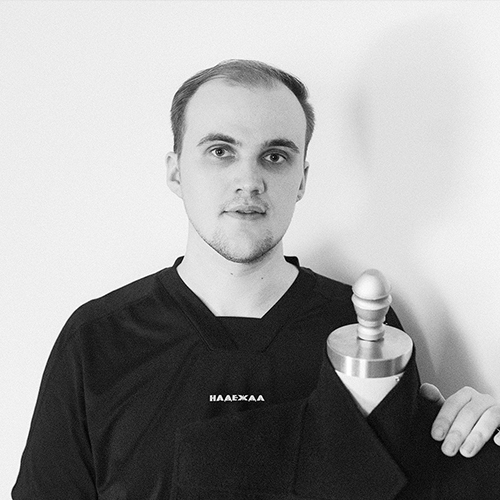
Egor Belykh
Sandra Nielsen Capuzzi
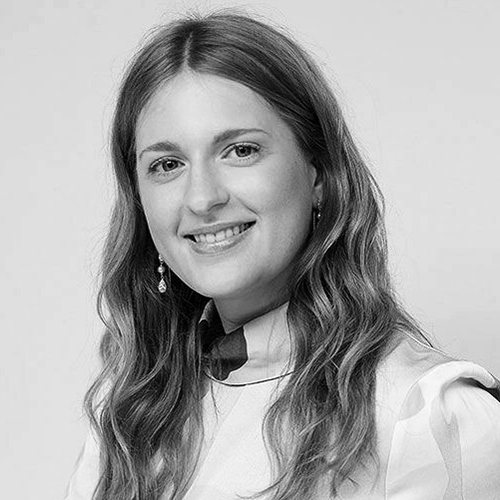
Sandra Capuzzi is a Danish-Italian fashion designer who earned a BFA in fashion design at Atelier Chardon Savard in Berlin (2021) before pursuing her MFA in Fashion Design at FIT. Her work combines traditions in bobbin lacemaking with sculptural 3D-printed pieces. In her universe, handmade textiles and tech are inseparable. This results in playful silhouettes in bold colors that both celebrate the future of technology and protect local textile communities.
My collection, Reel, is inspired by our lives on social media. We all live once in the physical world and several times virtually on social media platforms. The collection aims to merge digital and physical universes. Through my design practice, I present the audience with a perfected human being, beautified through filters and enhanced with crystals. Reel focuses on the vanity of human nature and our obsession with our own mirror image.
Jaheem Clarke
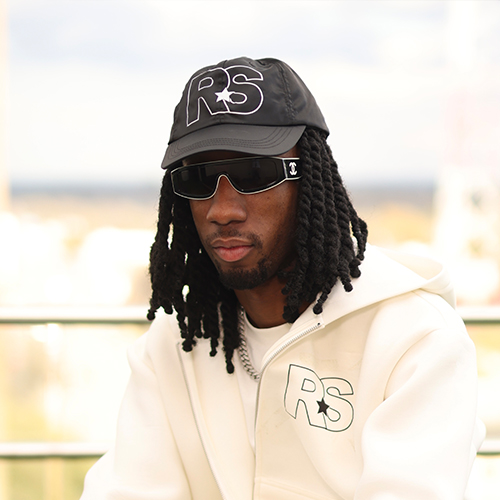
Jaheem Clarke is a New York–based menswear designer whose work merges tailoring and sportswear through a research-driven approach informed by Vorticism and geometric abstraction. He holds an AAS in Menswear, a BS in Technical Design, and an MFA in Fashion Design from the Fashion Institute of Technology. His practice explores structure, movement, craftsmanship, and precision through stark contrast, crisp paneling, and digitally developed textiles. Drawing from modernist art and architectural principles, Clarke translates historical abstraction into contemporary, wearable form.
My Cubist Form collection explores structure, fragmentation, and precision through a disciplined black and white palette. Inspired by Cubist art, I reinterpret traditional menswear silhouettes by breaking them into geometric panels, sharp lines, and layered planes that create movement through contrast rather than color. The absence of color allows texture, proportion, and construction to take center stage—matte against sheen, structured tailoring against fluid drape. Highlighting the tension between control and disruption, each look is intentionally composed, balancing minimalism with bold architectural form.
Eyoab Desalegn
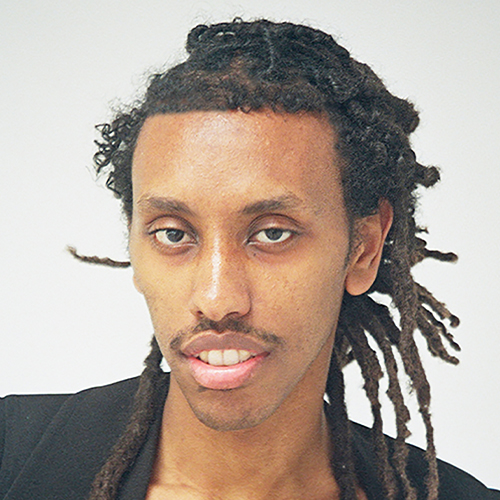
Eyoab Desalegn is an Ethiopian American reductionist and abstractionist, whose design practice focuses on simplifying as well as exaggerating the body and form into Ethiopic arrangements of primary colors, shapes, and motifs. Coming from a background in biochemistry and fine arts, Desalegn now uses fashion to express acute moments of expansive concentration, which draw upon the veiled memories and ghostly illusions of growing up as a queer person in Ethiopia.
Closeting Queerness centers around an array of clashing identities, stemming from the experiences of being queer and Ethiopian, as well as the systematic erasure of queerness from the Ethiopic cultural psyche. Closeting Queerness uses Avery Gordon’s definition of social hauntings—as “that which appear to not be there” as “having a seething presence acting on and often meddling with taken for granted realities”—as a starting point to explore the absence of queerness within the Ethiopic cultural psyche as the ghost that points toward a haunting taking place.
Brigid Holzer

Bridget Holzer approaches design first through material exploration and intuitive form-making. Her process is that of the fluidity of watercolors, where garments are given freedom to bloom and transform on the dress form. Drawing from the natural world, her work emphasizes the subdued, the organic, and the worn. Through clothing, she builds worlds where dualities intersect: soft and hard, light and heavy, masculine and feminine. As a result, subtle contrasts, textures, and handcrafted details become the main principles of her design.
Maiden seeks to explore femininity through a mythological revisionist lens. The collection reflects on maiden names, and how they are lost to patrilineal succession. Specifically looking at the Irish maiden name “Coughlin,” derived from “Cochlan,” meaning the descendant of one with the cloak, Maiden explores the ephemeral state of feminine beings and the forgotten mythologies of a pre-Christian Ireland. The collection focuses on handcrafted elements and obscured colors in reflection of the way things fade as they are passed down.
Greer Knebel

Greer Knebel is a sustainable fashion designer who specializes in knitwear. She takes great inspiration from nature, which can be seen in her biomorphic designs. She studied fiber arts and sustainability at Savannah College of Art and Design (SCAD). The designs for her MFA collection are heavily influenced by her sustainable approach: using secondhand materials, deadstock yarns, and natural dyes for her thesis. This is further exemplified by her choice of materials, as she hand knit the entire collection to allow the materials to be repurposed in the future.
Biomorphic Beauties is a knitwear collection focused on the human impact on our ecosystem. Inspired by nature, biomorphic forms, and environmental angst, this collection exclusively uses secondhand and deadstock materials. Although sustainable, this collection’s design is not compromised. Each piece is fully fashioned to minimize waste and increase recyclability. The garments can be taken apart, giving the materials the ability to become something new in the future. While this collection takes inspiration from our collapsing ecosystem, it is a hopeful approach to a more sustainable future.
Website
Instagram: @greegreeknits
LinkedIn
Email
Yongxi Liao
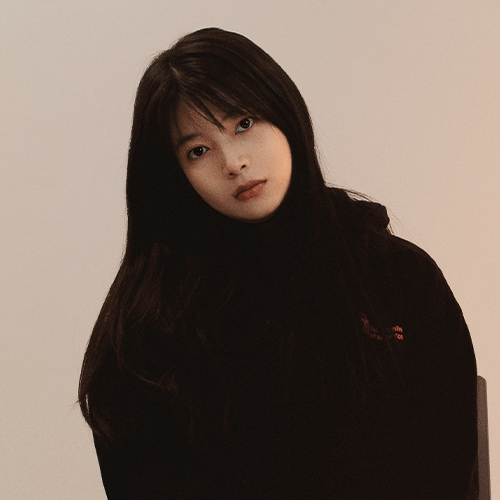
Yongxi Liao is a Chinese fashion designer who earned a Fashion Design MFA at the Fashion Institute of Technology. Her work focuses on reconstructing garment structures and exploring the interplay of diverse materials. Through the combination and contrast of different fabrics, she develops structurally driven designs that exist between wearable women’s wear and avant-garde fashion, investigating form, construction, and the relationship between body and garment. Her creative practice also engages with the concept of alteration, reinterpreting how clothing reshapes people’s perception of the body.
Refashioned Body is a project centered on surgical interventions in clothing. Using the structural language of suiting as its foundation, the collection simulates the real surgical processes of incision, displacement, suturing, and repair through garment deconstruction, reconstruction, and silhouette transformation. I employ embroidery and patchwork using diverse fabrics to suggest variations in “tissue” and “texture” to simulate surgical procedures. For me, everything exists for a reason. As a fashion designer, I want to use my approach to showcase different forms of surgery.
Instagram: @yongxi_liao
LinkedIn
Email
Haven Hanwen Liu
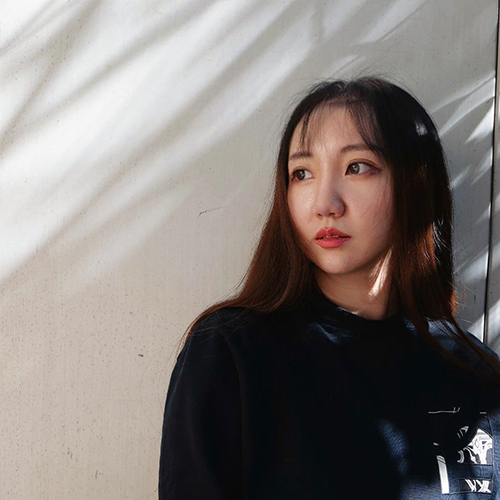
Haven Hanwen Liu is a fashion and costume designer based in New York and Toronto. She received her MFA in Fashion Design from FIT. Her practice centers on emotional storytelling and the construction of distinct characteristics. She is inspired by psychological and spiritual experiences, as well as conceptual narratives that imagine alternative or utopian worlds. Haven excels at translating abstract concepts into tangible forms, articulating them through symbolism, material language, and carefully constructed visual narratives. Through continuous textile experimentation, she seeks to create immersive visual languages.
Inspired by personal experience with sleep disorders, the collection Tales from Sleepless Nights examines the subtle tension between emotional and psychological states. Rather than presenting sleeplessness as a singular condition, the collection mixes a narrative of acceptance, confrontation, coexistence, and recovery. In the collection, objects associated with sleepless nights are personified and transformed into characters, each embodying a distinct emotional presence. Beyond aesthetics, the work becomes a material reflection on how the body and mind negotiate vulnerability and resilience in states of unrest.
Website
Instagram: @havenliu_
LinkedIn
Email
Ran Lu
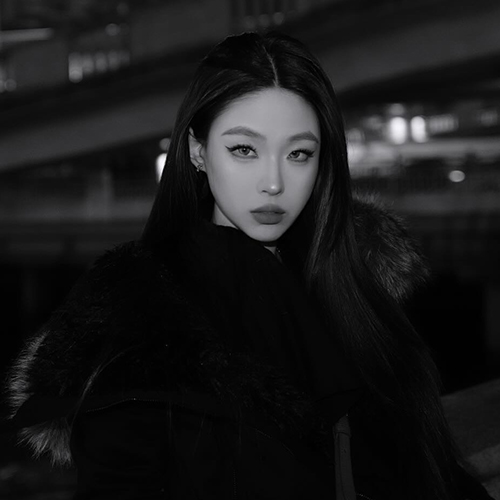
Evelyn Ran Lu is a Chinese fashion designer with a BFA from Savannah College of Art and Design (SCAD) and an MFA in Fashion Design from FIT. She was awarded a 2024 IDA Gold Award. Her practice spans a wide range of disciplines, including patternmaking, knitting, textile development, and fashion illustration. Her work embodies a distinctive tension between elegance and rebellion. Drawing inspiration from sculpture, historical narratives, and women’s rights, she challenges conventional garment structures and redefines fashion as a medium for female empowerment and self-expression.
Gentle Toughness explores women’s self-expression by reinterpreting the “utopian” female form depicted in ancient Greek sculptures and contemporary sculptures, challenging societal gazes upon women’s bodies. The collection explores how clothing serves as a medium for women’s pursuit of freedom and identity construction. Through contrasting fabrics and silhouettes—soft versus rigid, concealing versus revealing—the collection presents a feminine aesthetic, where elegance coexists with rebellion, emphasizing fashion’s power as a tool for female empowerment and self-expression.
Instagram: @ranlume_official
LinkedIn
Email
Roy Luo
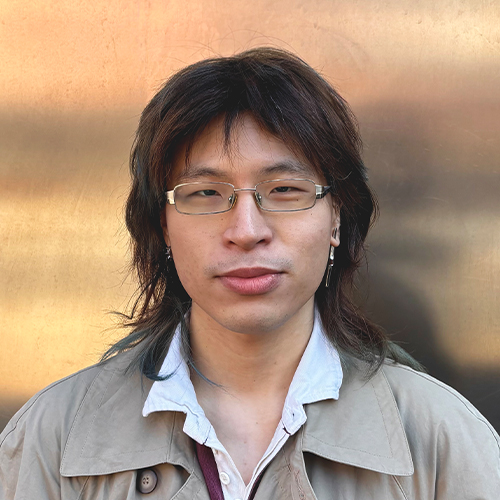
Roy Luo is a Canadian designer, based in New York, who views design as a tool to challenge gendered bodies and material culture. Their work is situated in the queer canon, toying with garments at the threshold between art objects and wearables. Their career spans technical design, patternmaking, and material exploration, punctuated by their role as a commercial knitwear designer. They hold an MFA from the Fashion Institute of Technology, along with a Bachelor of Design from Toronto Metropolitan University.
Self-Assembly Required is a thesis project negotiating gender plasticity in every sense of the word as it constructs our world. Roland Barthes describes plastics as alchemy for its ubiquity and transmutation. As a new medium of paradoxical mobility for the middle class and its material doppelgangers, to be plastic is to be a pliable and imitable product, thus a queer object. The body as a product is explored in this collection through the alchemic sublimes of reproduction, embodiment, and the intimacies to “being.”
Website
Instagram: @royluoart
Linkedin
Email
Paige Petrosso

Paige Petrosso is a luxury ready-to-wear and couture designer. Her experience spans from mass-market production to bespoke high fashion, giving her a rare, holistic perspective that balances a deep commitment to craftsmanship with strong product-development expertise. Her encounters with the world serve as the foundation of her storytelling, compelling her to transform abstract feelings and personal experiences into wearable art. Through soft sculpting and intentional handwork, Petrosso envisions each piece as a future heirloom as these stories are carried forward.
A mind trapped in yesterday explores emotional fallout from abrupt life change. Ezenwa E. Olumba’s studies on cognitive immobility provide language for the pull of reconstructed memories, a looping archive of glorified experiences that comforts while distorting reality. The result is a warped past, stolen moments in the present, and shifted expectations of the future. Structured outerwear, manipulated familiar forms, and material that contains memory, translate psychological paralysis into tactile form and embody nostalgia’s weight, safety, and quiet suffocation within garments that hold memory close.
Website
Instagram: @ppetrosso
LinkedIn
Email
Graeme Schneider
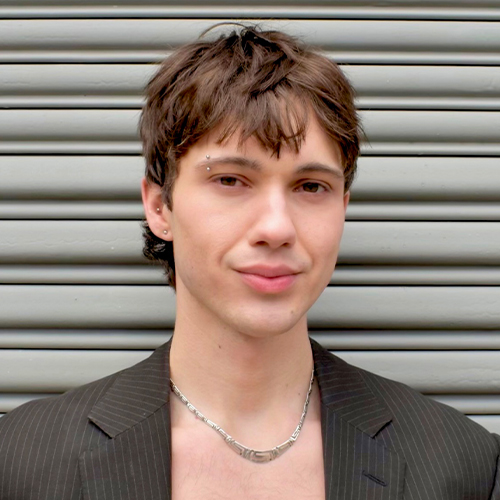
Graeme Schneider is a New York-based fashion designer with roots in Georgia. He holds a BFA in textile design from the University of Georgia and an MFA in Fashion Design from FIT. Graeme relies on his foundation in textiles to create innovative materials that merge traditional and alternative, questioning the line between object and garment. His work is inspired by elements of queer culture contextualized with historical references. Through this lens, he explores power dynamics between strikingly different communities, juxtaposing and fusing to create a league of renegades.
Machines were developed to offer power in a world of uncertainty. But rather being utilized to build, these tools have been repetitively used to oppress. In this collection, I have researched how machinery reinforces mechanisms of power. My historical research has focused on feudal systems and World War II military operations, juxtaposed with the evolution of queer culture. I believe queer communities can repurpose machinery in ways that benefit themselves—using the tools of our enemies to uplift rather than dominate.
Palak Kaur Sethi
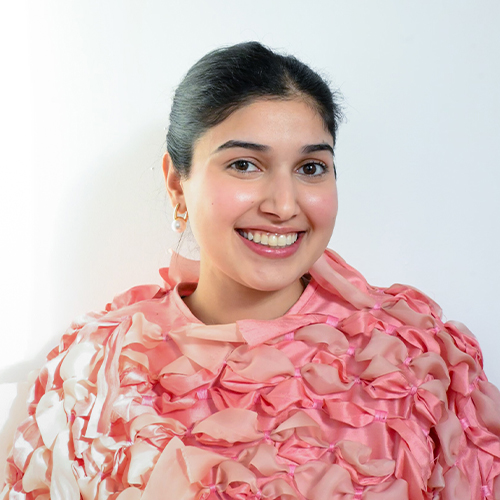
Palak Kaur Sethi is an Indian fashion designer based in New York, specializing in women’s wear and textile design. Her work challenges centuries of male-dominated ideals of modesty, reclaiming hyperfemininity through excess with an ambitious, confident, and independent voice. Passionate about surface design, she reimagines fabric as expressive language. She holds a BFA in fashion design from Nottingham Trent University and an MFA in Fashion Design from FIT. Sethi is a 2025 Hempel Award finalist and winner of the FIT X Marina Testino Sustainability Competition.
Miss. Behaved interrogates hyperfemininity as a construct shaped by the male gaze, once used to render women submissive and objectified. Through bombastic silhouettes, ultrafemme textile manipulation, and protective maximalism, the collection redirects attention from the body to the boldness of the garment. Each choice becomes a declaration of identity and freedom, culminating in one question: Who decides what a woman should wear?
She does, unapologetically.
Instagram: @palak_sethiee
LinkedIn
Email
Sky Tianyuan Shi
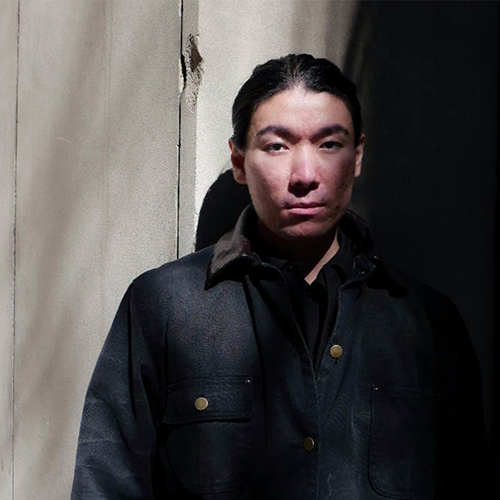
Sky Tianyuan Shi is a New York–based fashion designer from Hangzhou, China. His work combines historical references, functional construction, and modern techwear. Rooted in a people-centered approach (以人为本), his design process begins with the wearer—how a garment moves, fits, and functions in real life. His aesthetic is often described as poetic techwear: grounded, practical, and focused on material and construction. He pays close attention to cut, proportion, and fabric performance, creating garments that are meant to last and evolve with time.
The Long March was presented to me as powerful and enduring. Those who walked it did not know the future; they simply kept moving. That persistence without certainty stays with me. When an idea is repeated over generations, it can feel distant, less like lived history and more like language. But for me, it is not a slogan but an attitude. In this collection, I studied Chinese military uniforms and translated their structure and durability into garments that balance resolve, movement, and time.
Delaney Hope Slattery

Yufan Song
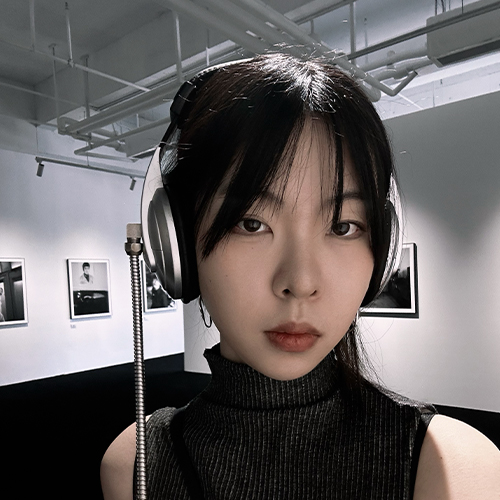
Yufan Song is a Chinese fashion designer and patternmaker. Living across different cultural contexts has shaped her perspective and inspired a particular fascination with transitional zones between no-man’s land and urban environments. Her work focuses on posthumanism and studies the interactions between human and nonhuman. By creating a series of distinctive patternmaking methodologies, she has developed a design approach that pushes the boundaries of traditional garment construction while maintaining a critical engagement with broader ecological and cultural contexts.
The collection Symbiont Nature envisions garments as living extensions of hybrid bodies, where myth and ecology intertwine. Drawing on figures such as centaurs and sirens, the collection merges human and animal anatomies to imagine survival within fragile futures. Skeletal structures are reinforced and skins reshaped into protective shells. Exploring bionics in menswear, the work combines experimental pattern cutting with textile innovation to express material fluidity and hybrid form. Through this symbiotic approach, the collection translates posthuman inquiry into commercially viable yet conceptually driven menswear.
Instagram: @s.yufanfashion
Email
Yushu Wang
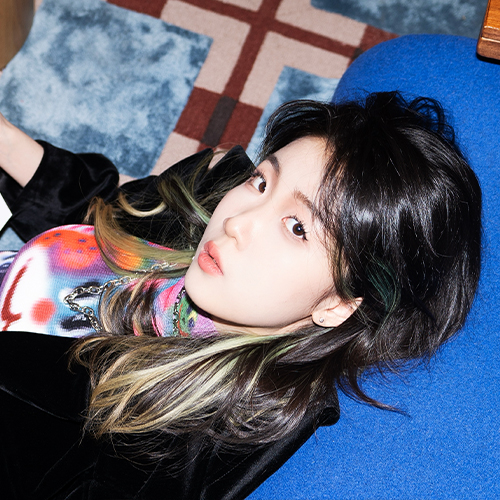
Yushu Wang is a fashion and textile designer working between garments and installation. Trained in Chinese design traditions and contemporary textile practice, her work draws on Eastern philosophies and material culture to explore how belief, ritual, and memory are embedded in everyday life. Through textile research and fabric manipulation, she examines the relationship between humans, nature, and cultural systems. Her practice emphasizes material experimentation and conceptual depth, highlighting the poetic potential of textiles as carriers of narrative and meaning.
This collection, I Wish, explores the tension between faith and fear within systems of transactional belief. In many cultural contexts, devotion operates as an exchange which generates anxiety: the fear that insufficient devotion may result in punishment. This cyclical dynamic between reverence and dread becomes the conceptual foundation of I Wish. Drawing from psychological patterns of ritual behavior and the aesthetics of horror narratives, the collection translates these invisible negotiations into a nonbinary fashion language, where garments embody both protection and vulnerability, devotion and threat, control and surrender.
Instagram: @sheu_wang
Email