

Thesis Capstone 2026

Art by Shreya Patel
Welcome to the Graduate Exhibition and Experience Design Thesis Capstone 2026!
The adjudication of the students' work will take place in person on Dec 11th with
a celebratory Evening Reception 5-7pm.
Exhibition and Experience Design 2026 MA Candidates
Click the green menu button at the top right of this page for more information.
Anna Soucy
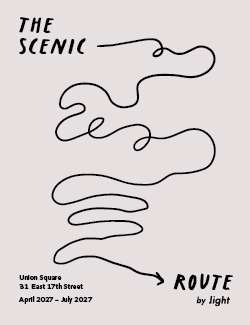
When telling an "authentic" or "real" story in an exhibition environment, it is the objects – their situations, juxtapositions and curation – that can do the work of capturing and conveying the story with emotion and opportunities for meaning-making. Exhibiting and juxtaposing authentic objects in situ, alongside other artifacts and props or facsimiles rather than alone, invites more opportunity for a more visually comprehensive, memorable, and emotional visitor experience.
When considering the power of contextualized objects to convey notable contemporary events, exhibition creators should look to rapid collecting strategies, juxtaposition and composition of historic artifacts along with mundane contemporary objects, to increase the authenticity of future exhibitions.
Client: Light Phone
Venue: The White Box 31 E 17th Street, New York, NY
Audience: Teens to Young Adults 16-36
Email: [email protected]
LinkedIn: https://www.linkedin.com/in/anna-soucy/
Grace Warnick
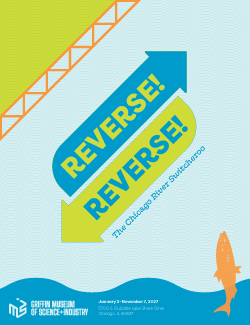
Thesis Statement: Humor is a powerful tool for coping with the difficulties of life, learning new things, and bridging social divides. Museums have an underexplored opportunity to use humor and comedy in new ways to capture attention, reduce anxiety, and subvert expectations as a means to inspire positive social change and give visitors agency towards action. By translating comedic devices and techniques into space, exhibition designers can enhance their narrative storytelling for a variety of topics, and create meaningful experiences that motivate visitors by facilitating joy, stress relief, and social connection.
Client: Clean Water Action and The STEM Alliance
Venue: Griffin Museum of Science and Industry
Audience: Teens and Young Adults (Ages 13–25)
Email: [email protected]
LinkedIn: www.linkedin.com/in/grace-warnick
Iris Yee
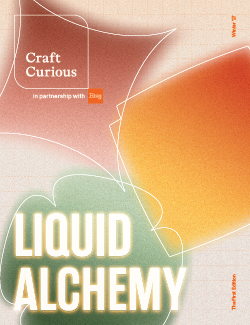
Craft is an intentional form of making that encourages personal expression and creative storytelling. When practiced collectively, it transforms individual creativity into a shared social experience that fosters belonging and togetherness. Through craft-based interactions in experiential environments, exhibition design can create welcoming third places that foster meaningful social connections and help address feelings of isolation among Gen Z in an increasingly digital world.
Client: Etsy and The Center for Craft
Venue: 54 Crosby Street
Audience: Curious Makers (Ages 21-29)
Email: [email protected]
LinkedIn: https://www.linkedin.com/in/iris-yee
Jenny Estevez
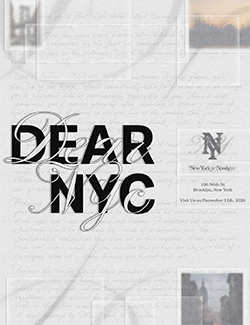
Belonging is a human need, yet it is often treated as a privilege, leaving many without it. Experiential design, from museums to brand activations, aims to evoke many emotions in visitors but rarely makes belonging the goal. Belonging has many elements: social ties, psychological safety, cultural recognition, and place, the element this work examines.
Place attachment, the theory that explores the cognitive and behavioral bond between people and meaningful environments, offers designers a way to foster a feeling of belonging within experiential spaces. This thesis argues that when designers design with belonging as the goal and place attachment as the framework, visitors form stronger, more meaningful connections to both the space and the brand. Those connections, in turn, grow into long-term brand loyalty and a desire to return.
Client: New York or Nowhere
Venue: 106 N6th St, Brooklyn, New York
Audience: New Yorkers & NYC Tourists
Email: [email protected]
LinkedIn: https://www.linkedin.com/in/jjenny-estevez/
Jessica Doan
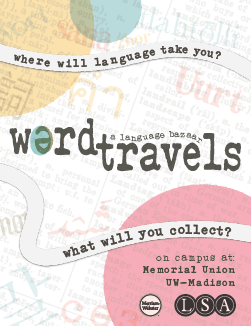
Exhibition Designers have an opportunity to harness the power of positive fantasy
engagement. By utilizing elements commonly found in tabletop role-playing games and
open-world video games–worldbuilding, role assumption, player agency, and emergent
storytelling– designers can create experiences that move beyond passive observation
and invite audiences into a shared narrative.
Rather than functioning solely as entertainment, these experiences can use psychological
distance to help audiences feel more comfortable engaging in difficult ideas, exploring
personal perspectives, and participating in meaningful social experiences. In this
framework, visitors are not simply stepping away from reality for a moment, but returning
with new ways of understanding themselves and the world around them.
Client: Merriam-Webster Inc. and Linguistic Society of America
Venue: Traveling Exhibition starting at Memorial Union, University
of Wisconsin-Madison
Audience: College Students and Language Enthusiasts
Email: [email protected]
LinkedIn: www.linkedin.com/in/jessica-doan63
Lily Li

Brands are creating environments that fall flat, often dropping their standard 2D graphics into physical spaces rather than creating engaging experiences. Branding should extend beyond the 2D to encompass all senses. Light, color, material, scale, enclosure, orientation, and pacing can shape the atmosphere of a space and create a more emotional experience.
What if atmosphere were treated not as a byproduct of other design decisions, but as a design parameter in itself?
Client: Scholastic
Venue: The Current (Pier 59, Chelsea Piers)
Audience: Children (6 - 12) visiting with parents, caregivers, family members,
or school groups.
Adults who grew up with I SPY and Scholastic.
Email: [email protected]
LInkedIn: [email protected]
Lydia Lee
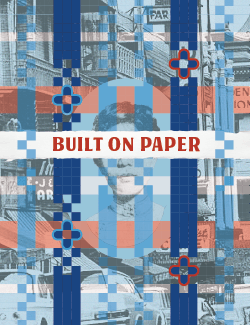
Thesis Statement: As the world becomes increasingly unpredictable and overwhelming, visitors often enter museums and exhibit spaces already carrying the stressors of modern life. Applying the framework of magical realism to the exhibition space leverages ordinary experiences that visitors relate to with a layer of disbelief and discovery that allows an experience to be impactful, serve as a space to practice magical thinking, and guide visitors to find deeper meaning in their experiences. By activating a response of surprise and curiosity, designers can create speculative and immersive environments that engage visitors in layered discovery through use of personal narratives and elements that subvert expectations such as illusions, playing between the senses, and moments of wonder.
Client: Chinese Culture Center of San Francisco and Angel Island Immigration Station Foundation
Venue: San Francisco Ferry Building
Audience: Chinese-American Young Adults (18-39), Families, and First and Second Generation Immigrants
Email: [email protected]
LinkedIn: https://www.linkedin.com/in/lydiayylee/
Marina Latto
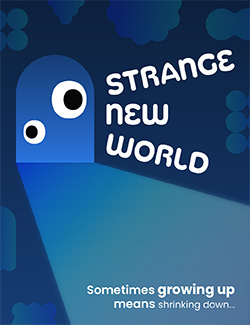
When normal human experiences are stigmatized, silence turns natural processes into sources of shame that persist across generations. For instance, stigma surrounding menstruation hinders critical conversations between caretaker and child, limiting understanding and creating social isolation during puberty. Experience design can aid this developmental transition by transporting visitors to a world with social norms different from their own: changing unfamiliar concepts into shared experiences. Allegorical storytelling and playful learning provide accessible frameworks for difficult conversations, supporting families as they navigate puberty with more knowledge, confidence, and mutual understanding.
Client: Scarlet by RedDrop
Venue: Global School Brooklyn (Crown Heights)
Audience: Children (ages 7-11) and Caretakers
Email: [email protected]
Maya Peters
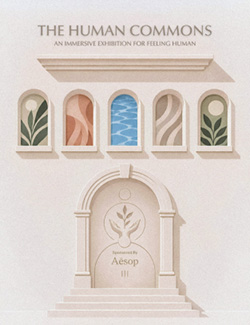
Thesis Statement: Modern life is increasingly fast, commercial, and screen-driven, and many people feel mentally drained and disconnected as a result. Exhibition and experience design can respond as a form of care, by creating emotional infrastructure: environments deliberately shaped to help address human emotional needs. The specific pressures of modern life will keep changing in form, but the human need for refuge, restoration, and meaning will not. This thesis therefore proposes a framework of conditions for care that designers can use to create environments that act as antidotes to overstimulated culture, from now to the future.
Client: Aesop
Venue: Brooklyn Museum’s Beaux Arts Court
Audience: Digital Natives (Age 18-35)
Email: [email protected]
LinkedIn: https://www.linkedin.com/in/maya-marzuki-peters
Sarah Reynolds
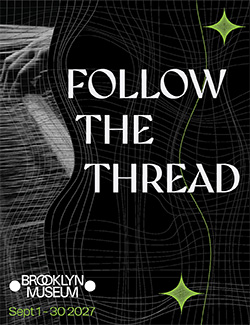
At the advent of the digital age, programmers and designers aimed to minimize user friction in an effort to create digital interactions that were intuitive and easy to use. Decades later, we are in an age of algorithmically-based digital environments that relies on hyperpersonalization and frictionless design in order to remove any and all discomfort that might come up in our online experience - no thinking required. This has resulted in a digital landscape that eats away at our cognitive abilities and our ability to relate to people across differences.
In this study, I will examine the idea of “productive friction” - the idea that learning through struggle results in a deeper and more memorable understanding of the concept. By studying this idea through education studies, video games and movement-based learning, I will show how the museum environment can act as an “anti-algorithmic” space by using productive friction as the engine of exhibit design. By utilizing problem-solving, collaboration and physical movement in exhibit design, we can create engaging experiences that restore capacity for social cohesion and deep focus, thereby undoing some of the harms caused by the frictionless algorithmic environment.
Client: Brooklyn Museum
Venue: Brooklyn Museum
Audience: Audience: Gen Z (Ages 14-29)
Email: [email protected]
LinkedIn: https://www.linkedin.com/in/sarah-r-2392631b2/
Shreya Patel
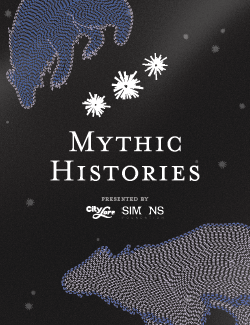
This study explores how employing the subjunctive mood and asking what if questions in exhibitions can help foster mini-c creative growth within visitors. By focusing on mini-c creativity–the creativity found in learning, where experiences and information are new and personally meaningful to the individual–exhibitions can create room for building confidence in the process of discovery. In creating spaces that give visitors permission to imagine, play, and take creative risks without the fear of being wrong, designers can offer the public an understanding that creativity is a lifelong muscle and universal characteristic that belongs to everyone.
Client: City Lore and Simon’s Foundation Science Sandbox
Venue: The First National City Bank of New York
Audience: Teens and Adults (Ages 14 - 45)
Email: [email protected]
LinkedIn: https://www.linkedin.com/in/shreyabpatel/
Summer Xiang
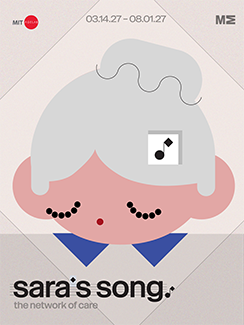
Thesis Statement: As people age, everyday tasks can become more challenging, increasing the demands on older adults and their caregivers. This thesis looks at how responsive technologies embedded in physical environments can provide personalized assistance and contextual support, easing the burden of caregiving while helping older adults maintain their independence and quality of life. Through exhibition design, the research extends into a narrative about aging; illustrating how technology and community work together to provide the optimum network of care.
Client/Venue: MIT Age Lab, MIT Museum
Audience: Adults 45 -65
Email: [email protected]
Bhavya Ohri
Client:
Venue:
Audience:
Christina Walker
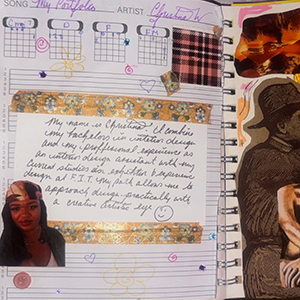

Fashion and Music are powerful storytelling devices that communicate cultural reaction to a historical time period's political climate.
Client/Venue: Underground Atlanta
Audience: OutKast Audience, Fashion and Music Enthusiasts
Email: [email protected]