

Fashioning Desire: Willy Chavarria and Bárbara Sánchez-Kane
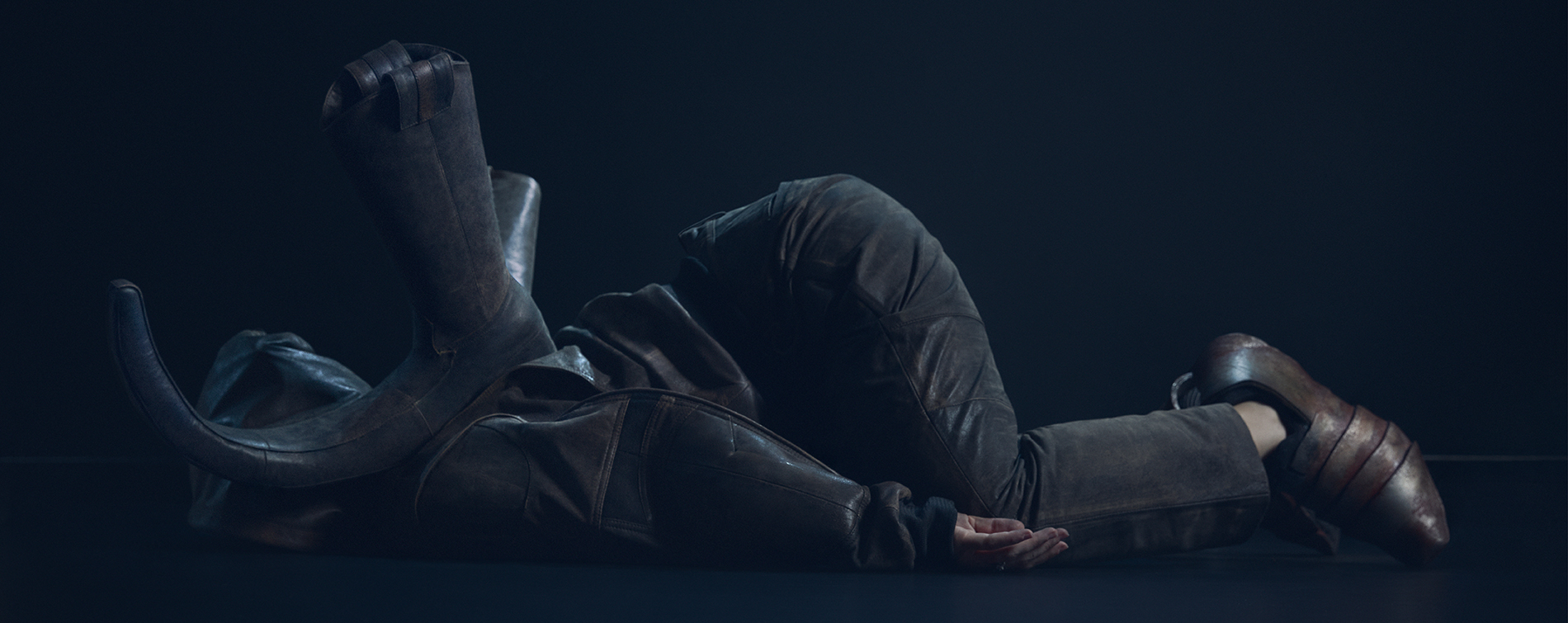 Bárbara Sánchez-Kane’s costume for Aimilo Arapoglou’s participation in Aguas Frescas
at Performance Space New York, 2026. Aguas Frescas, Performance by Bárbara Sánchez-Kane,
Director, Sofia Alazraki, Performer, Aimilios Arapoglou, Costume, Barbara Sanchez
Kane. Image courtesy of Sofia Alazraki.
iff
The Museum at the Fashion Institute of Technology (MFIT) presents Fashioning Desire: Willy Chavarria and Bárbara Sánchez-Kane, a groundbreaking bilingual exhibition exploring the work of two acclaimed queer designers of Mexican heritage whose innovative collections are reshaping global fashion. On view from February 17 to April 18, 2027, the exhibition brings Chavarria's and Sánchez-Kane's work into dialogue for the first time, examining how their identities and cultural backgrounds inform their creative visions. Featuring approximately 60 objects, which include fashion, photography, and video, the bilingual exhibition will celebrate each designer's distinct approaches while highlighting their shared exploration of identity, desire, and contemporary fashion.
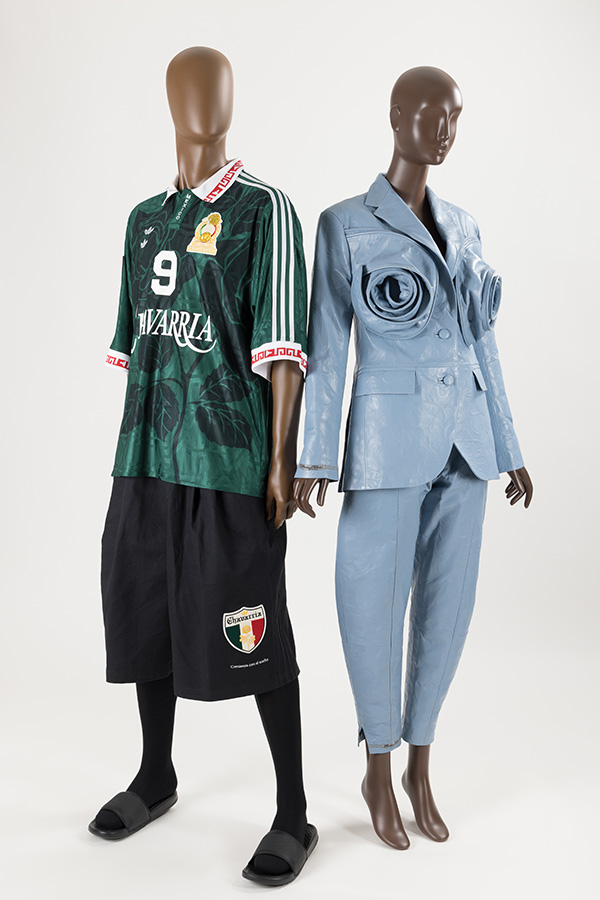
Chavarria, a major figure in American fashion, has been described by Vanessa Friedman, fashion director and chief fashion critic at The New York Times, as "one of the founding fathers of a new wave of New York designers reinventing American style." Celebrated Mexican designer Bárbara Sánchez-Kane has earned international recognition for her distinctive artistic and fashion practices. Their work explores desire in its many forms, from sensual and libidinal desire to the desire for belonging, resistance, and visibility. In Fashioning Desire, desire serves as a connecting force between the designers' creative practices, identities, and approaches to fashion, reflecting the ways that difference and otherness can generate new forms of creative exchange and connection.
Organized by Tanya Meléndez-Escalante, MFIT's general manager and the 2026 recipient of the Vilcek Prize in Fashion and Culture, Fashioning Desire: Willy Chavarria and Bárbara Sánchez-Kane examines the ways in which two influential designers draw on their Mexican heritage, queer identities, and personal experiences to challenge and expand contemporary fashion. The Vilcek Prize in Fashion and Culture recognizes foreign-born individuals who have made extraordinary contributions to writing, curation, documentation, and image-making in the American fashion industry.
"An exhibition dedicated to their work represents a significant contribution to the growing scholarship on fashion, gender, and identity, shedding light on how these issues shape fashion within LGBTQ and Latinx communities," says Tanya Meléndez-Escalante, curator of the exhibition. "At the heart of the exhibition is an exploration of how gender, sexuality, heritage, and the construct of race influence designers' creative practices."
The bilingual exhibition is organized thematically, bringing together works by both designers that reveal shared aesthetics and ideas. With fluid boundaries, these sections allude to the binational origins of the creators. Chavarria is of Mexican and Irish descent, while Sánchez-Kane's mother is of Irish American descent and their father is Mexican.
The exhibition begins by showcasing the audiovisual work of Chavarria and Sánchez-Kane, including fashion film and video art. Also on display will be the work of photographers who frequently collaborate with them. These audiovisual pieces will be displayed as examples of the porosity of personal identity and the relationship between fashion and art. Ephemera and fashion accessories will be placed in vitrines, inviting viewers to examine them closely. This opening section will allow visitors to experience the vision of both designers and will provide an immersive introduction to their worlds.
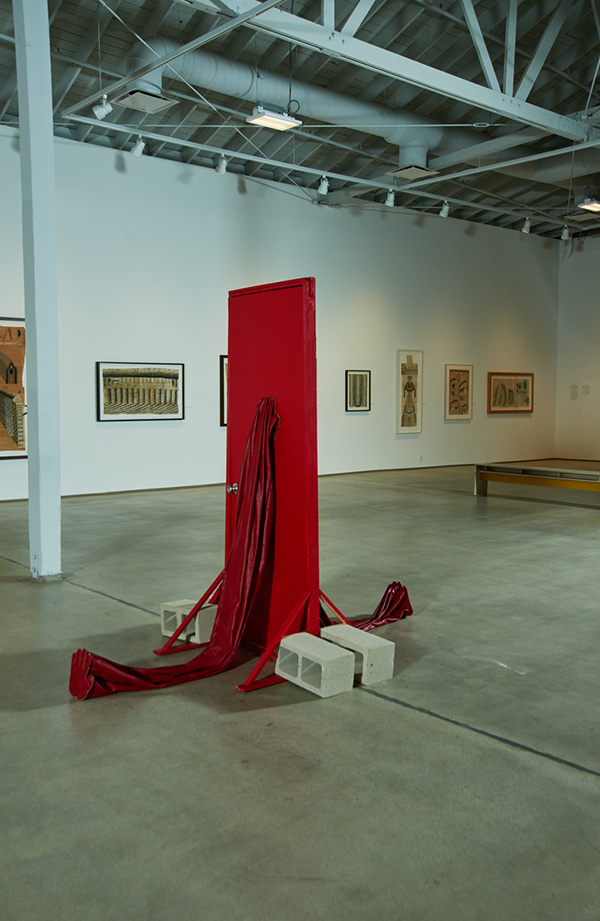
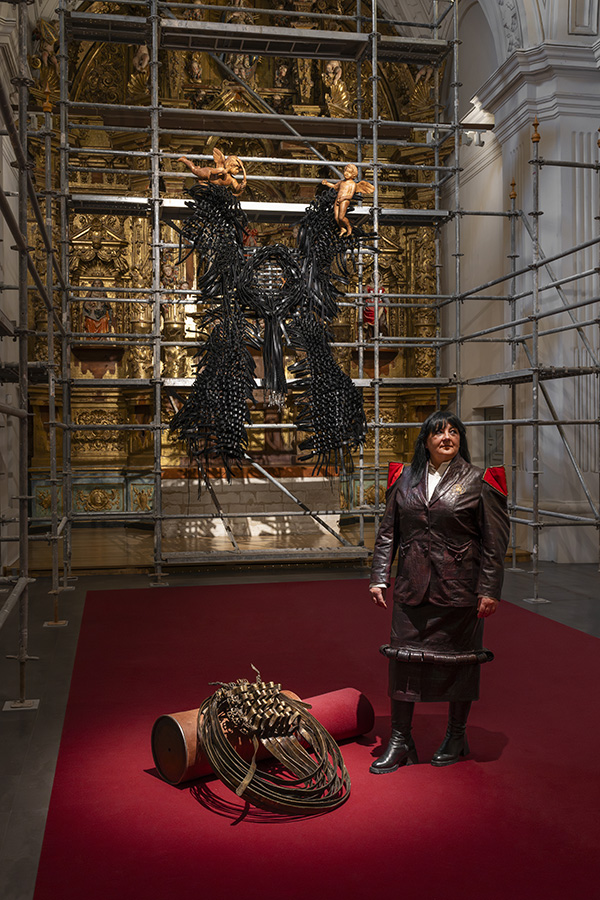
Bárbara Sánchez-Kane, Vast Graveyard of the Missing, Institute of Contemporary Art, Los Angeles, 2017. Photo by Frankie Carino.
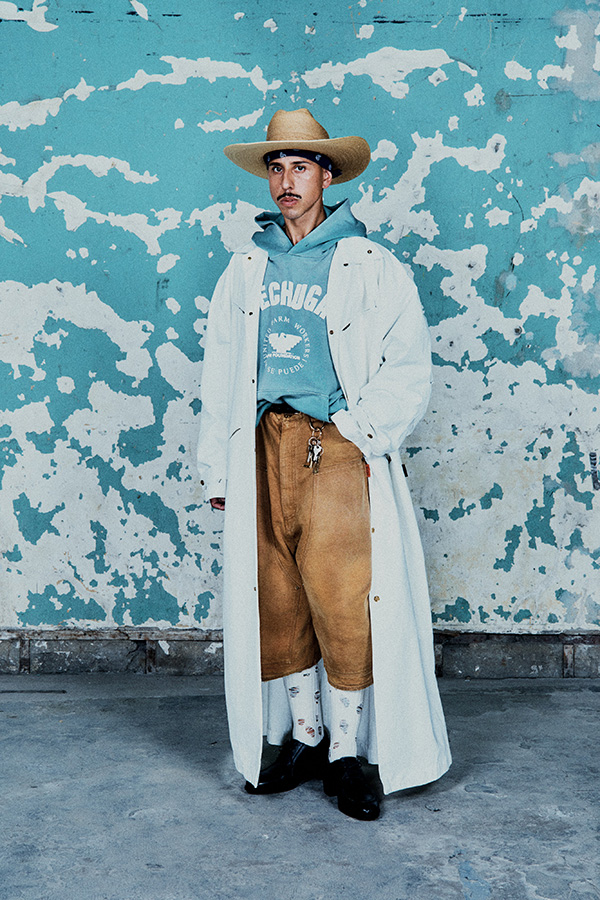
Willy Chavarria's look 41 of the spring 2025 América collection. Photo by Diego Bendezú. Courtesy of Willy Chavarria.
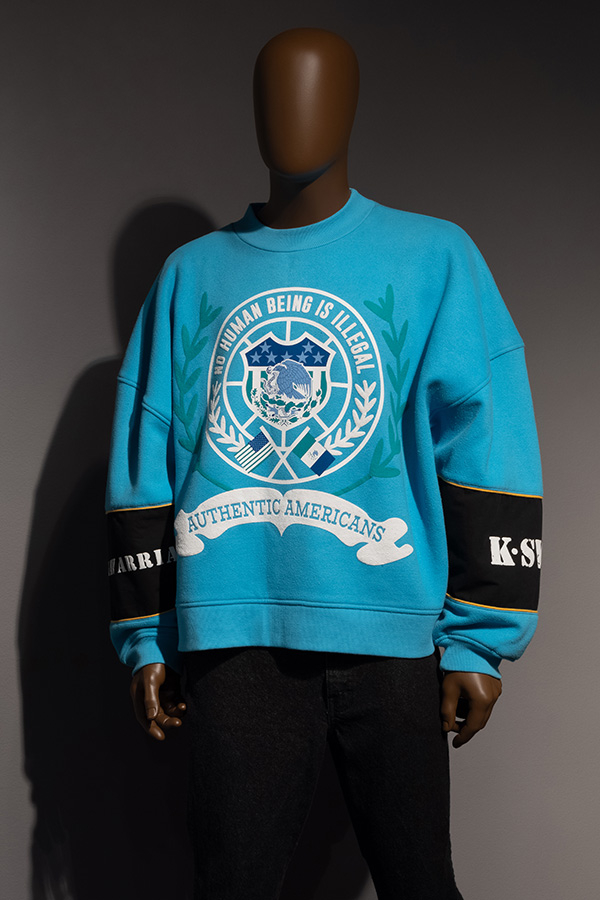
Willy Chavarria x K-Swiss, "No Human Being Is Illegal" sweatshirt, spring 2020. The Museum at FIT.
Blurred Boundaries/Fronteras difusas
A central theme of the exhibition is the crossing and porosity of borders—geographic, disciplinary, and even gender-related. In Vast Graveyard of the Missing, Sánchez-Kane alludes to the experience of leaving, whether it be a homeland, an identity, a lover, or the fear of being left behind. This artwork, which symbolizes change and transition, invites viewers to explore the gallery.
Mexican Heritage/Herencia mexicana
Willy Chavarria and Bárbara Sánchez-Kane draw on their Mexican heritage to explore notions of identity, politics, and other issues. In his spring/summer 2025 collection, Chavarria presented a look featuring a sweatshirt emblazoned with the word "sandía," meaning watermelon in Spanish, alongside the logo of the United Farm Workers, the labor organization founded by César Chávez and Dolores Huerta, that became closely associated with the Chicano civil rights movement of the 1960s and 1970s. The look highlights the ways Chavarria draws on language, cultural history, and symbols of collective action to explore Mexican American identity, community, and belonging.
Uncomfortable Truths/Verdades incómodas
This section brings together garments and artworks that confront difficult subjects, including violence, oppression, inequality, immigration, and belonging. Through their creative practices, both designers transform deeply personal and politically charged experiences into works that invite reflection on the realities faced by marginalized communities.
Violence against women is one such often-overlooked reality. Following a sexual assault in Mexico City, Sánchez-Kane presented a performance in Paris that included a metal corset she wore during the presentation. The corset, which will be featured in the exhibition, demonstrates how she transformed a traumatic personal experience into an act of artistic expression, confronting violence through the language of fashion and performance.
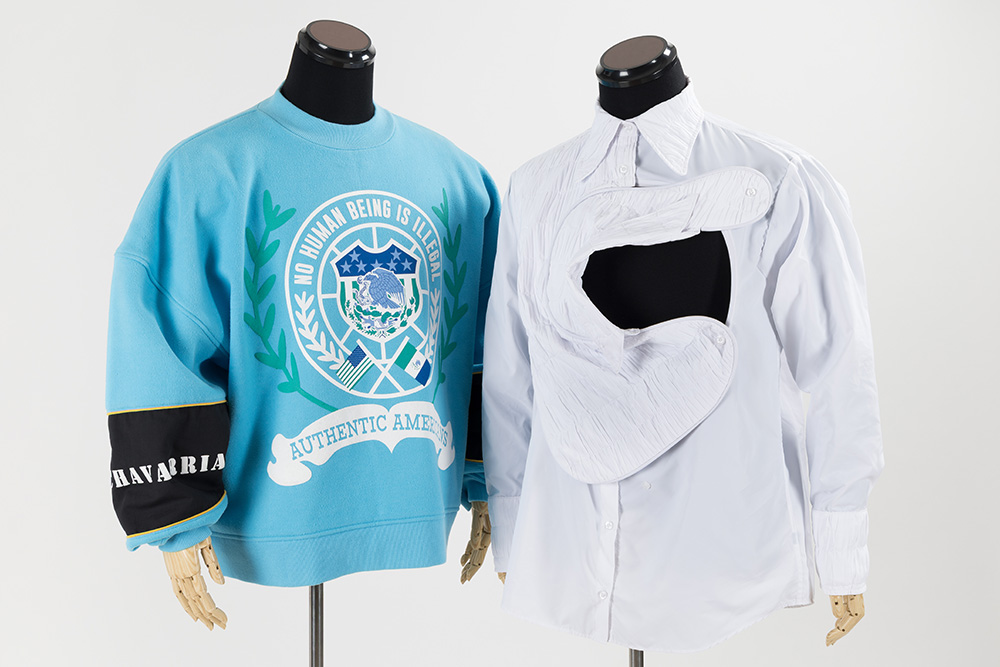
Chavarria similarly addressed questions of exclusion and belonging through his designs. His Willy Chavarria x K-Swiss spring 2020 "Authentic Americans" sweatshirt is emblazoned with the statement "No Human Being Is Illegal." The garment reflects his longstanding engagement with immigration and the contributions of immigrant communities to American society. Chavarria uses fashion to examine the boundaries of belonging, asking who is included in the idea of America, who is excluded, and how national identity is constructed.
Bodies/Cuerpos
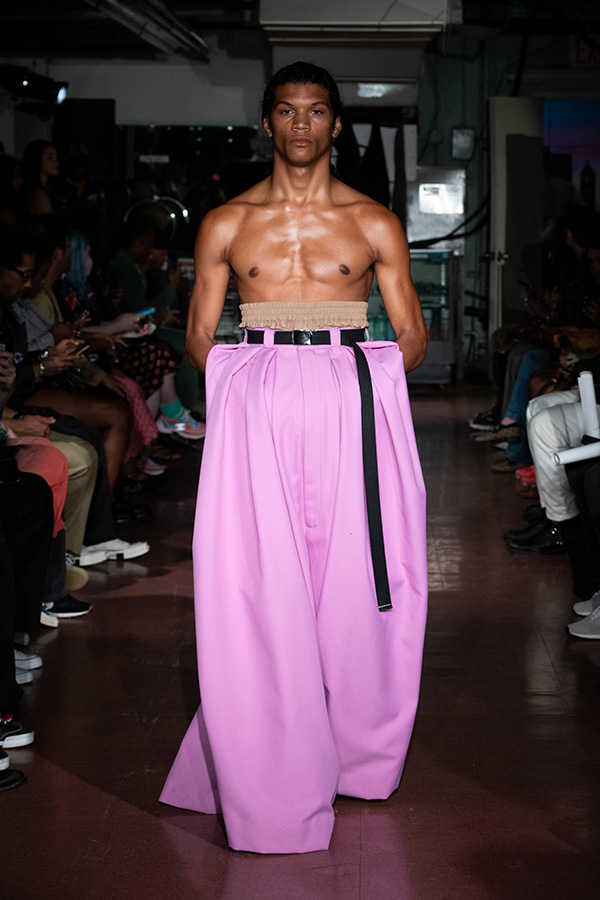
The body is the bearer of fashion; it is the site where sexuality is expressed and desire is experienced. At times, prudery can stand in the way of celebrating the human physique. Garments such as the bright pink trousers from Chavarria's spring 2020 collection, originally worn on the runway by a dark-skinned model, will be displayed in the exhibition in a similar manner—on a shirtless mannequin with a brown skin tone. This presentation not only celebrates the beauty of brown bodies but also acknowledges sexuality and its intensities, which are central concerns in the work of both designers.
Ecstasy/Éxtasis
As with the other themes of the exhibition, whose interpretations are intentionally open-ended, "ecstasy" carries multiple connotations, ranging from the sexual to the mystical. Sánchez-Kane alludes to religion on several occasions, including in a black leather sculpture supported by two angelic figures. This piece is part of Sánchez-Kane's exploration of objects that can function both as garments worn on the body and as sculptures displayed on a wall, highlighting the presence—and absence—of the human figure.
Press Images and Additional Content
Exhibition Imagery
Fashioning Desire: Willy Chavarria and Bárbara Sánchez-Kane has been made possible thanks to the generosity of the Couture Council of The Museum at FIT.
