

Beyond Utility
 Yvonne Schichtel, Trench Dress, 2021. Photo courtesy of designer.
Share the exhibition with #BeyondUtilityMFIT
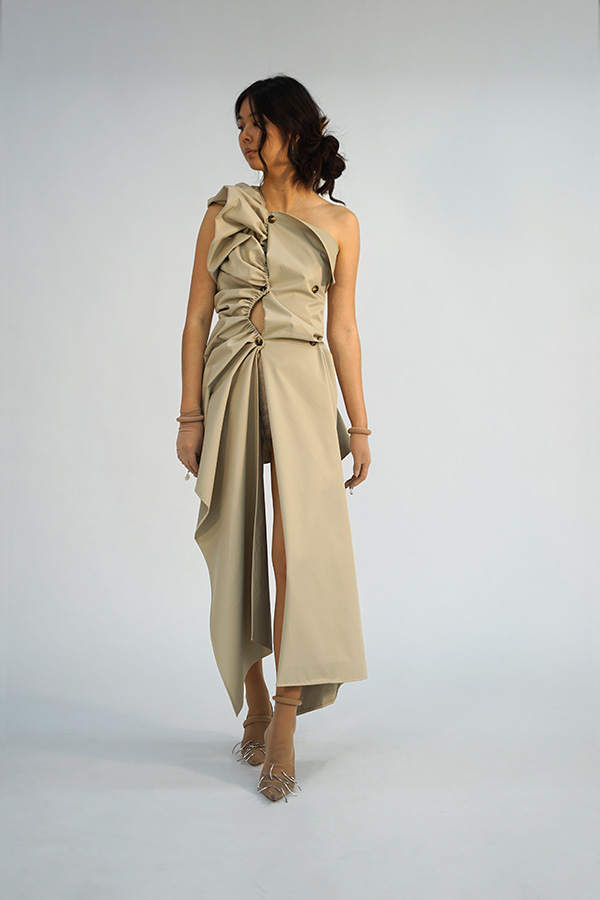
What is it about utilitarian clothing that invites continual reinvention? Beyond Utility, a new exhibition presented by the School of Graduate Studies at the Fashion Institute of Technology (FIT) in collaboration with The Museum at FIT (MFIT), examined the ongoing transformation of garments born of necessity within and beyond the fashion system. Conceived and organized by graduate students in FIT's Fashion and Textile Studies (FTS): History, Theory, Museum Practice MA program, the exhibition featured never-before-displayed objects from the MFIT Study Collection and the FTS Graduate Study Collection, pairing utility archetypes with reinterpretations by designers including Issey Miyake, Bonnie Cashin, Junya Watanabe, Burberry, and Moschino.
Beyond Utility, on view in the Goodman lobby from February 25 to March 22, 2026, asserted that the fundamental principle of utilitarian clothing design is practicality, often prioritizing protection of the body, freedom of mobility, and material durability. Yet these garments rarely stay fixed in their original function. Over time and across cultures, they acquire layered meanings, perpetually renegotiating their place in the fashion system.
On one end of the spectrum, high fashion designers have transformed utilitarian garments with luxurious fabrics and abstracted silhouettes, highlighting form over function and obscuring their intended purpose. On the other end, these same garments have been co-opted and adapted by members of resistance and counterculture movements, to confront social norms and communicate defiance.
Featuring never-before-displayed objects from the MFIT Study Collection, dating from 1850 to the present, the exhibition brought together archetypal utilitarian garments and their fashion reinterpretations within the same space. Chronology was not the focus; instead, the dialogue demonstrated how clothing born of necessity continues to shape ideas of style—from factories and battlefields to runways and city streets.
Organized into three sections—Workwear, Military, and Craft—the exhibition invited visitors to draw new connections between familiar fashions such as trench coats, denim, and patchwork, and to engage in an active dialogue about materials, aesthetics, and cultural meaning.
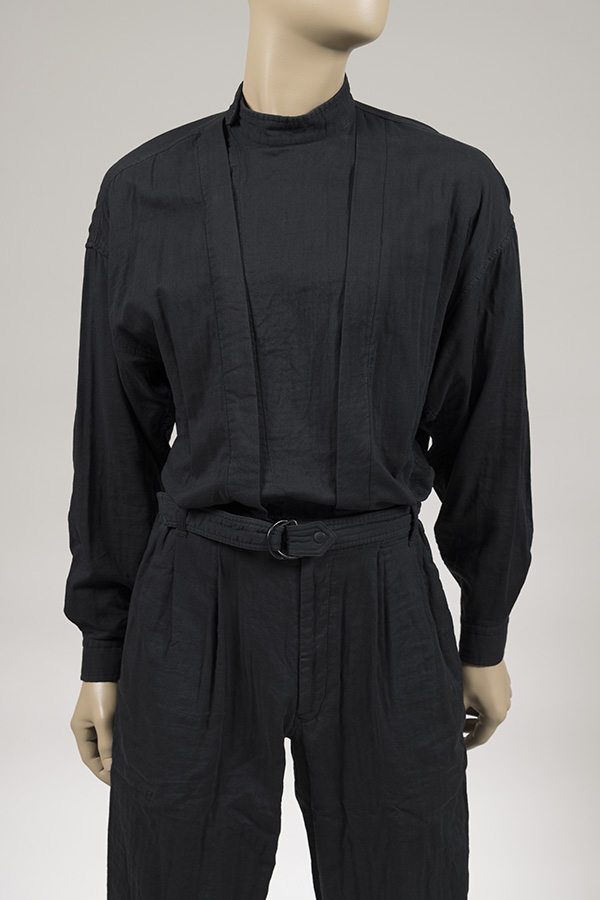
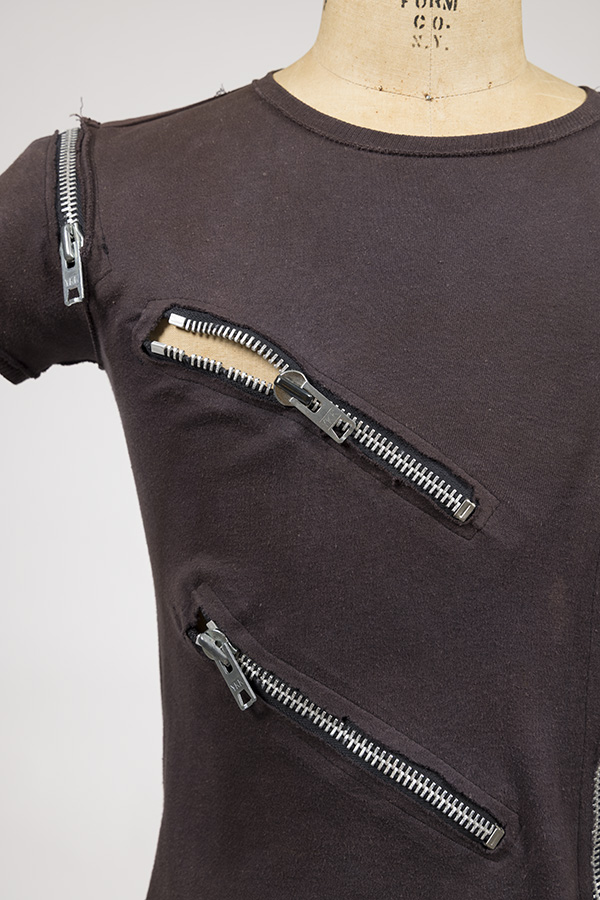
The first section, "Workwear: Beyond the Factory," highlighted a tactile language of design grounded in durability: the reinforced stitching, metal hardware, and heavy textiles that once protected bodies engaged in physical labor. Through the examination of overalls, carpenter jeans, aprons, and more, visitors considered how a shift towards leisure, status, or artistic expression softens or mutes the garments' original protective intent.
"Military: Beyond the Front" investigated fashions developed for discipline, defense, and coordination. Originally meant to obscure individuality, signal authority, or conceal and conform, garments such as trench coats and sailor uniforms, and concealment tactics such as camouflage and khaki, have been reinterpreted to express personal power, political resistance, and cultural identity.
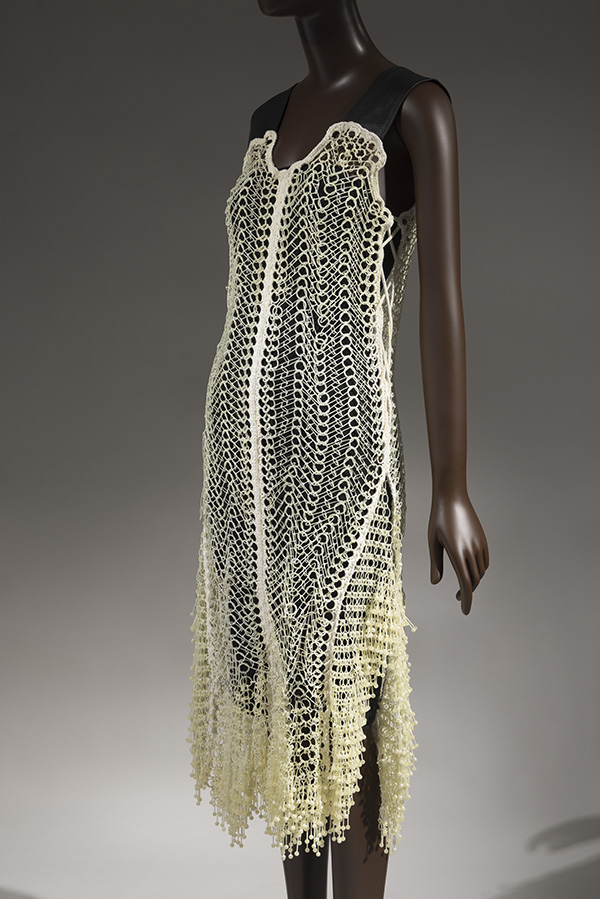
"Craft: Beyond the Home" centered on handworked techniques such as knitting, quilting, crochet, patchwork, and visible mending. The expressive adaptation or surface imitation of these structural methods alludes to their utilitarian roots while simultaneously negating the intentional labor behind them. Visitors were invited to consider the tactile qualities and sensory experience of handcraft in a world where fashion is dominated by mass production and inauthenticity.
By tracing how utilitarian garments shift from items of necessity to objects of fascination, Beyond Utility encouraged audiences to reevaluate the seemingly ordinary objects in their own wardrobes—recognizing the heritage they carry, the identities they communicate, and the power they hold.
Press and Additional Content
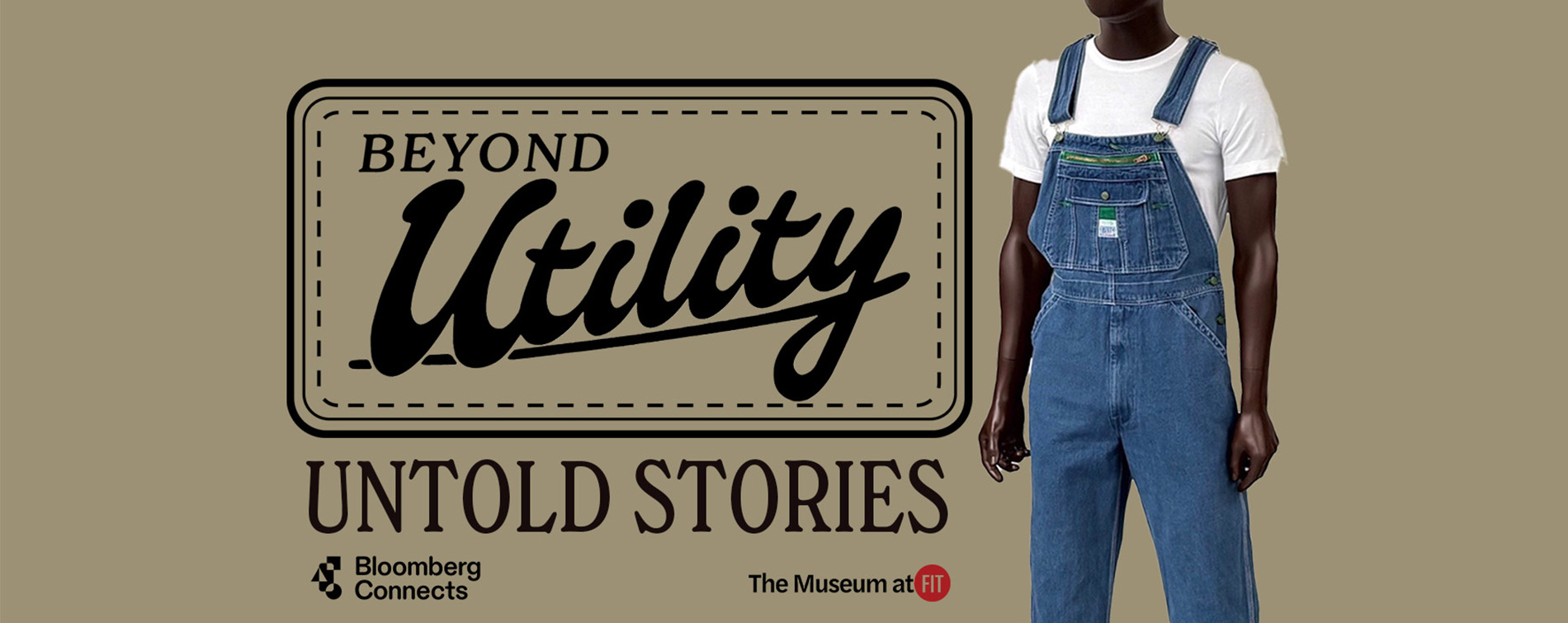
Untold Stories on Bloomberg Connects
This Bloomberg Connects feature takes a closer look at the personal histories of objects
in Beyond Utility.
Beyond Utility shines a light on utilitarian garments and textiles typically left out of museum collections,
reevaluating the heritage and power they hold. As a result, many of the objects on
display come from the personal collections of student curators. Interviews with lenders
reveal the lived experiences of these objects, highlighting their layered identities
and various uses. Utility implies a relationship between an object and a user, and
this project brings that relationship to the forefront. By hearing directly from
the lender, we can closely examine the object’s versatile functions and personal significance,
exploring what it really means to go beyond utility.
In the Press
Beyond Utility Mending Workshop
From Function to Fashion: The Enduring Legacy of Utilitarian Design
Dive deeper into Beyond Utility
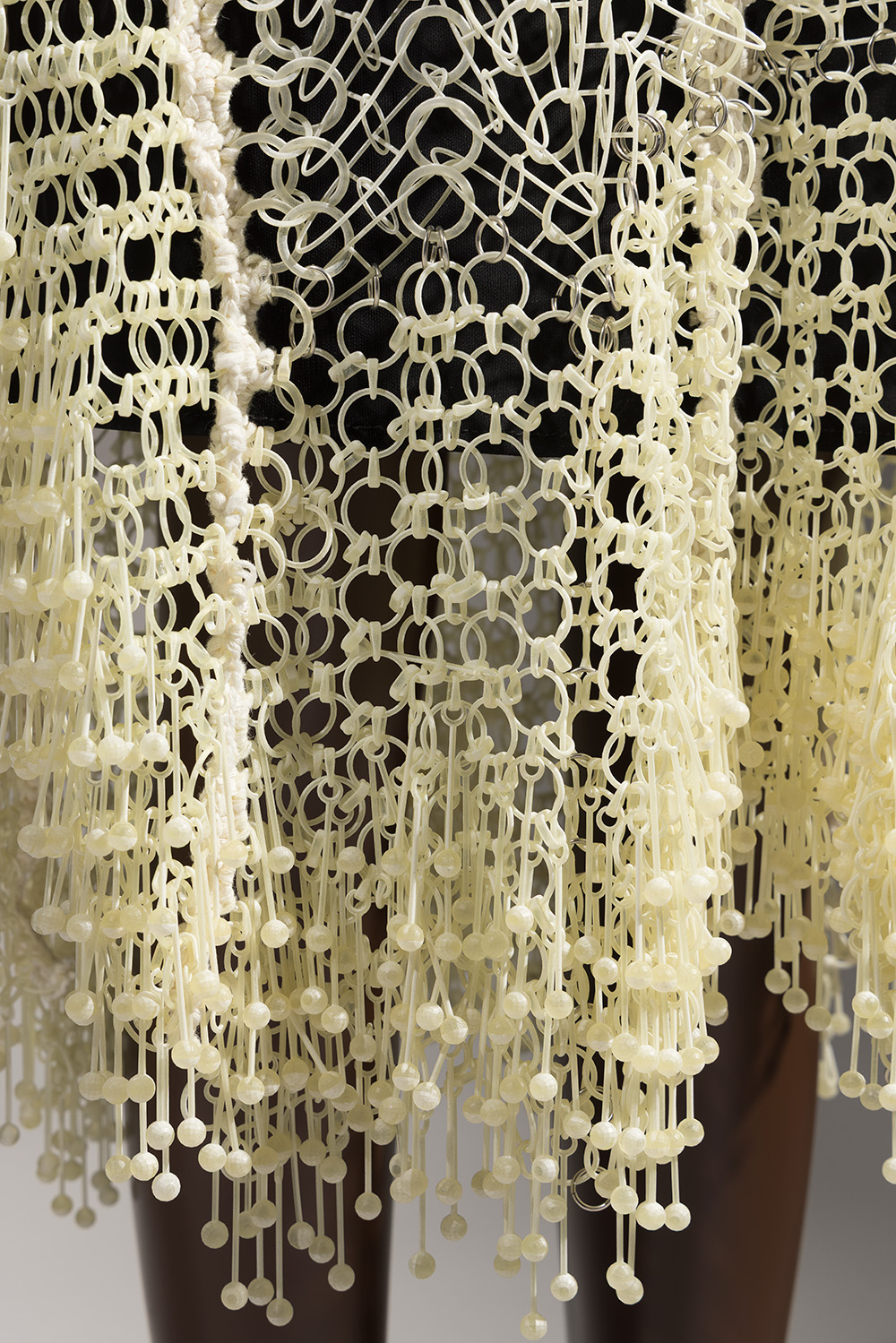
Image: Ohne Titel, dress, off-white 3D-printed plastic links crocheted with cotton, leather, 2016, USA, gift of Flora Gill and Alexa Adams, Study Collection, 2022.33.1.